T3
Gunslinger - West Crack
Date: 05-31-2026
Partner: Jack Van Lancker
Trailhead: Yankee Boy Basin
Distance: 5 miles (with 4x4 access)
Elevation Gain: 2200ft
Duration: 9hrs
Over the past year Jack and I connected around getting ourselves into the right kind of trouble. Jack's desert climbing experience, skiing abilities and taste for adventure made him the perfect partner for this mission.
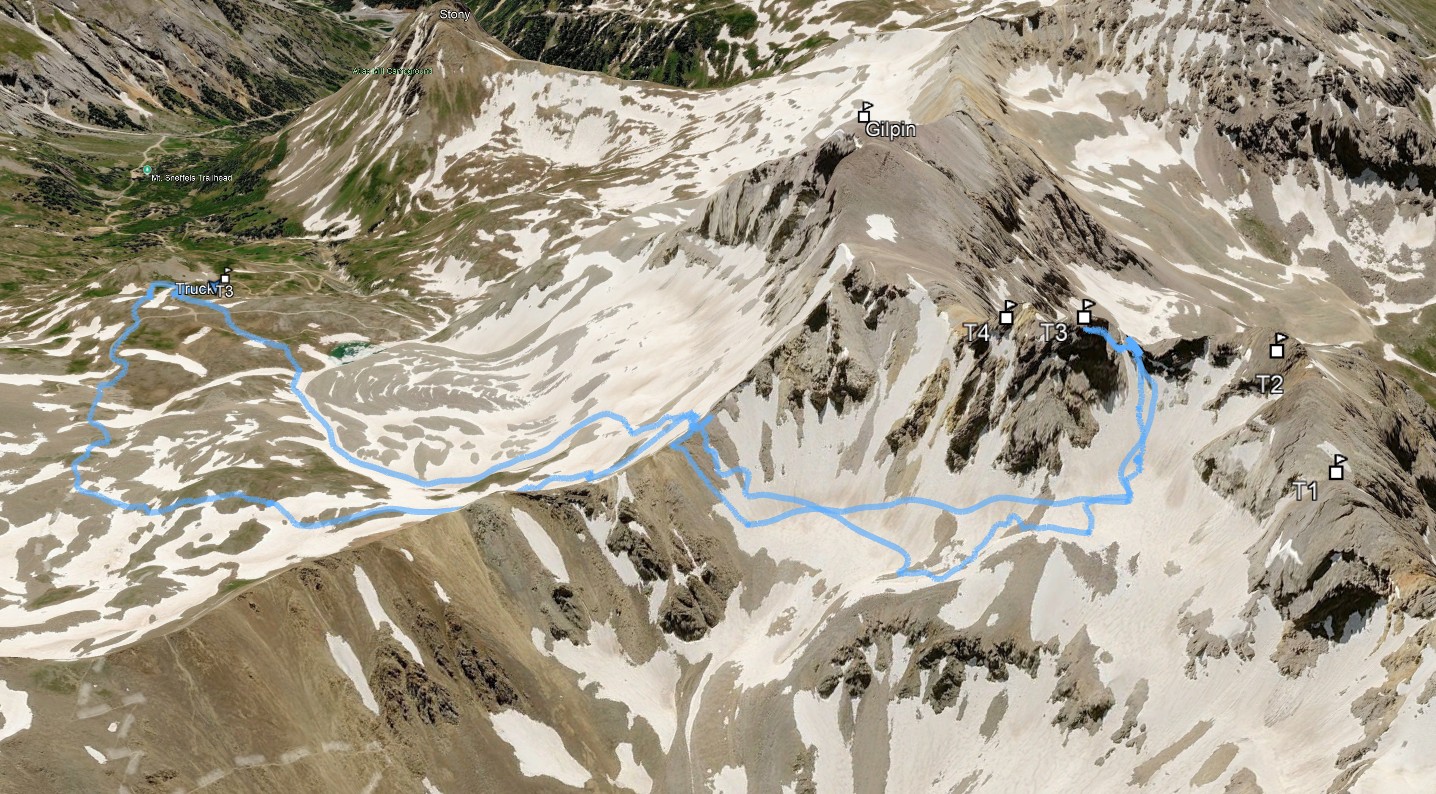
Two days after I climbed Sneffels SW Ridge to gather snow beta, Jack and I met in Ouray at 8:30am and drove my truck within a half mile of the upper Yankee Boy TH.
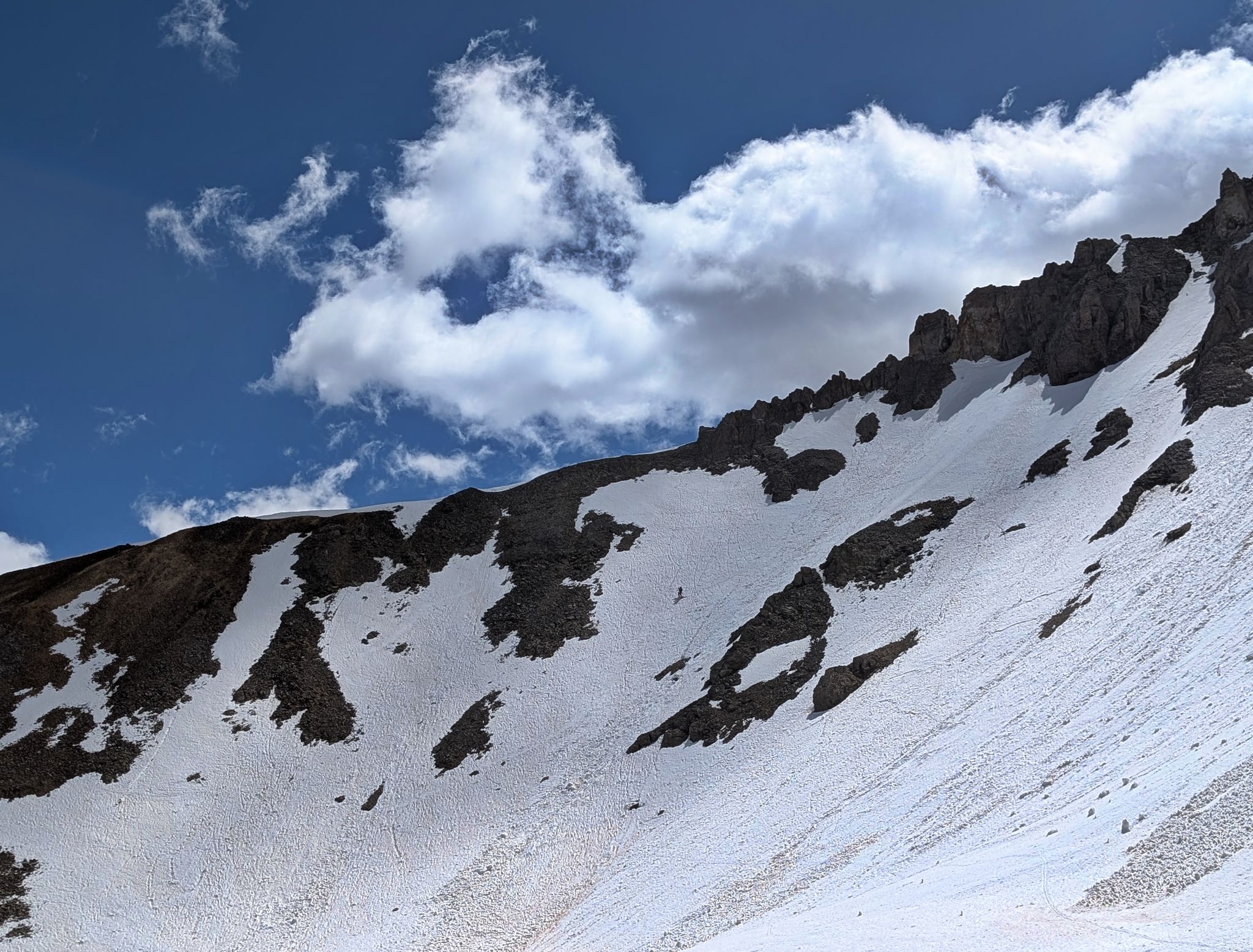
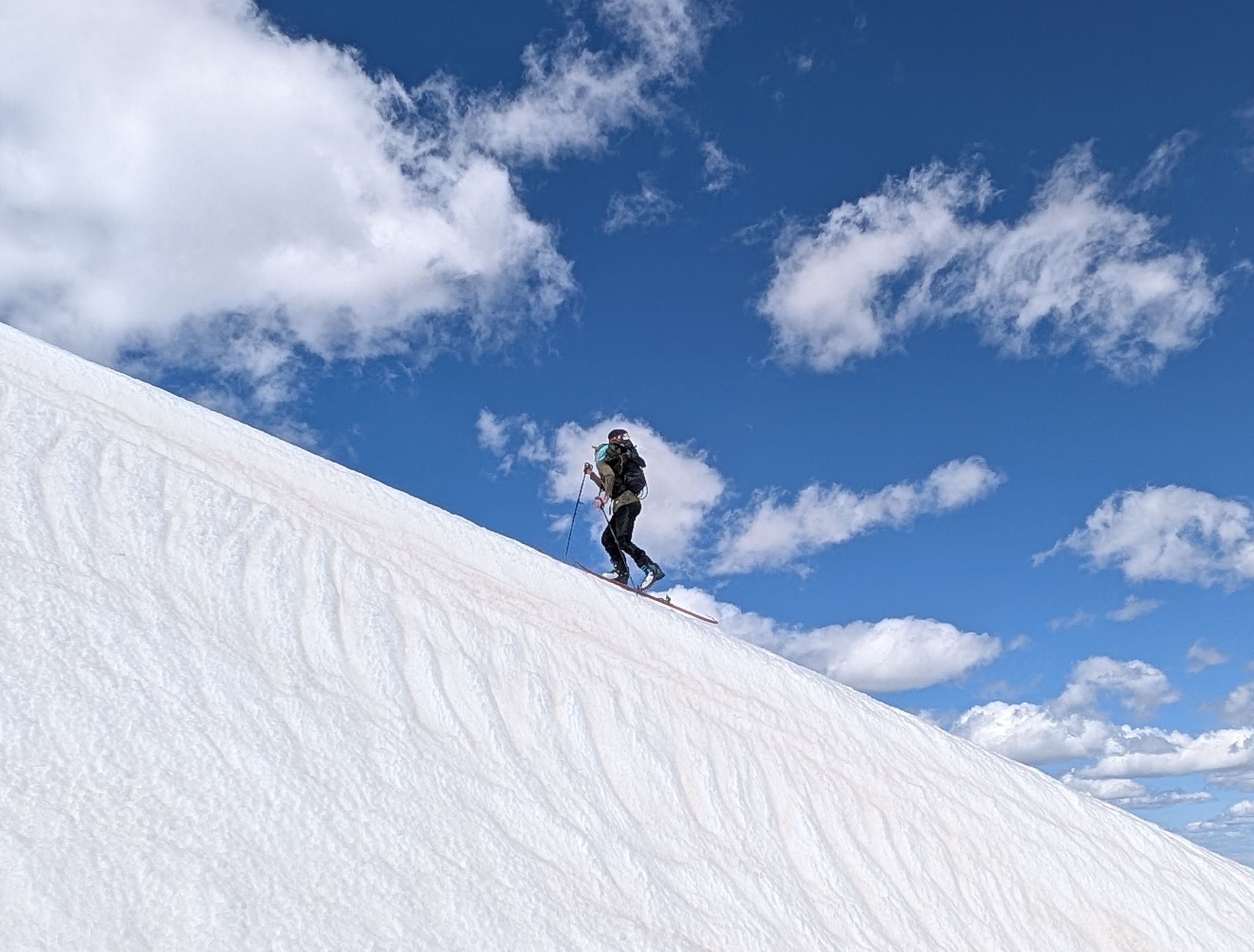
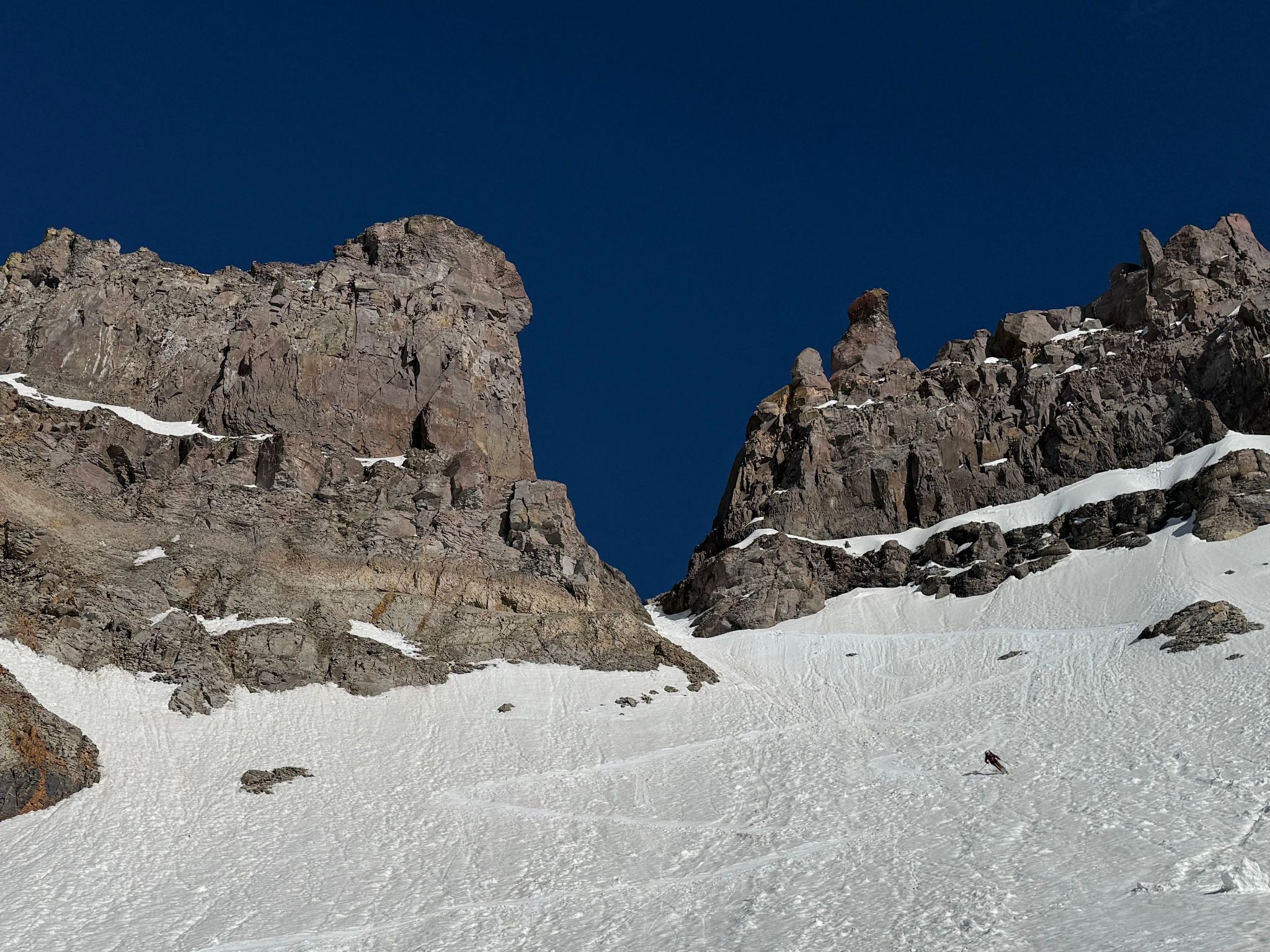
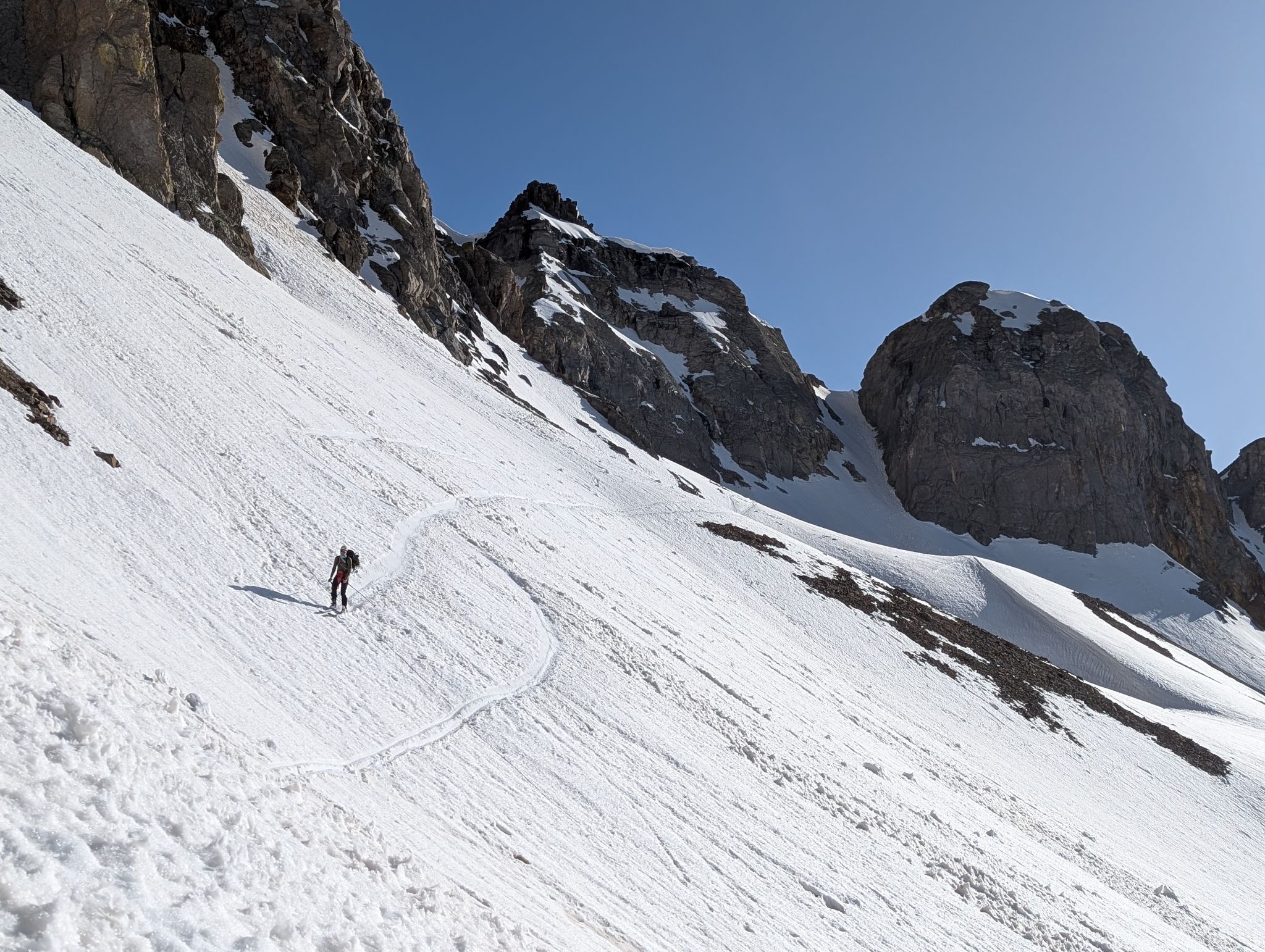
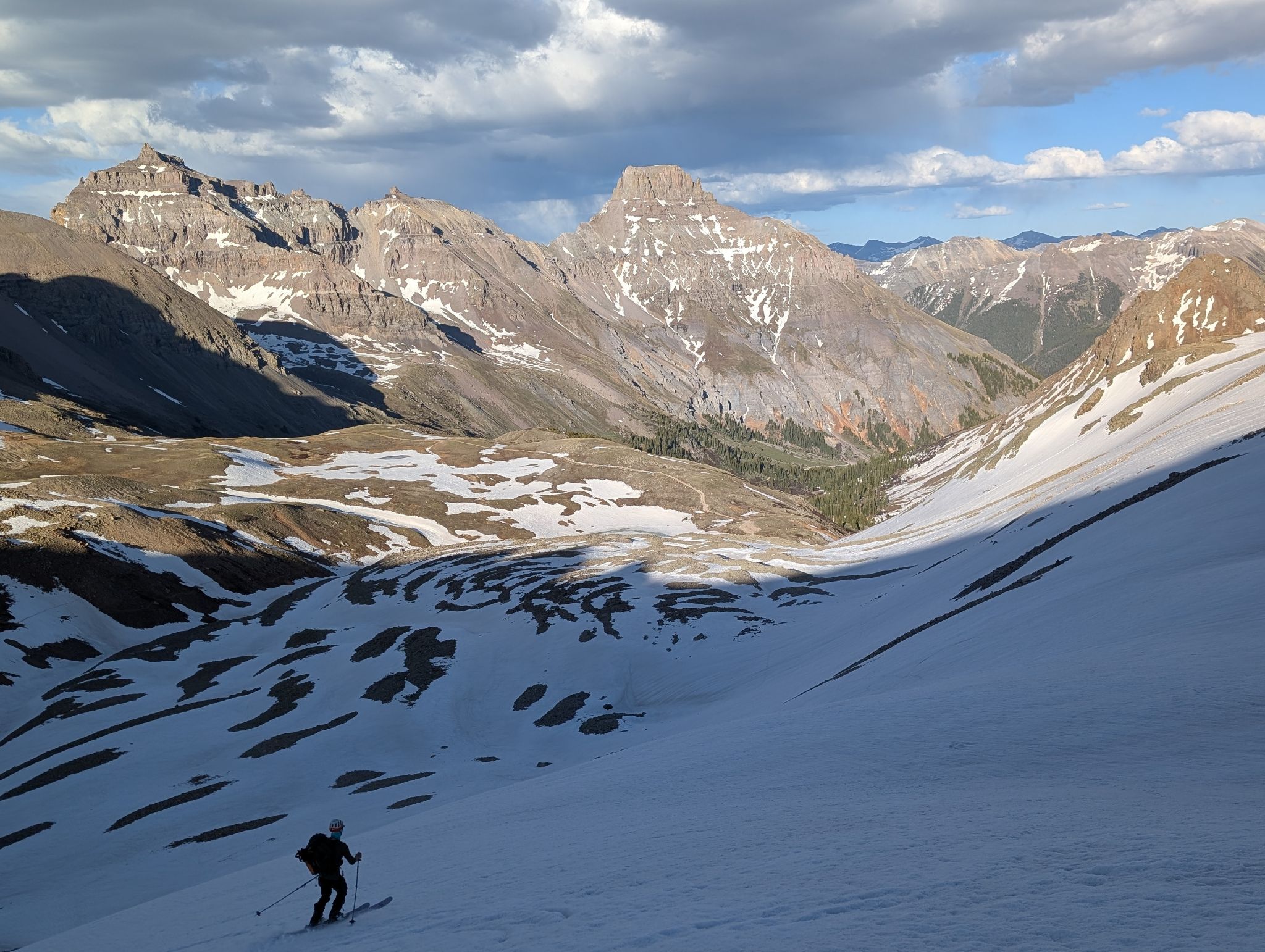
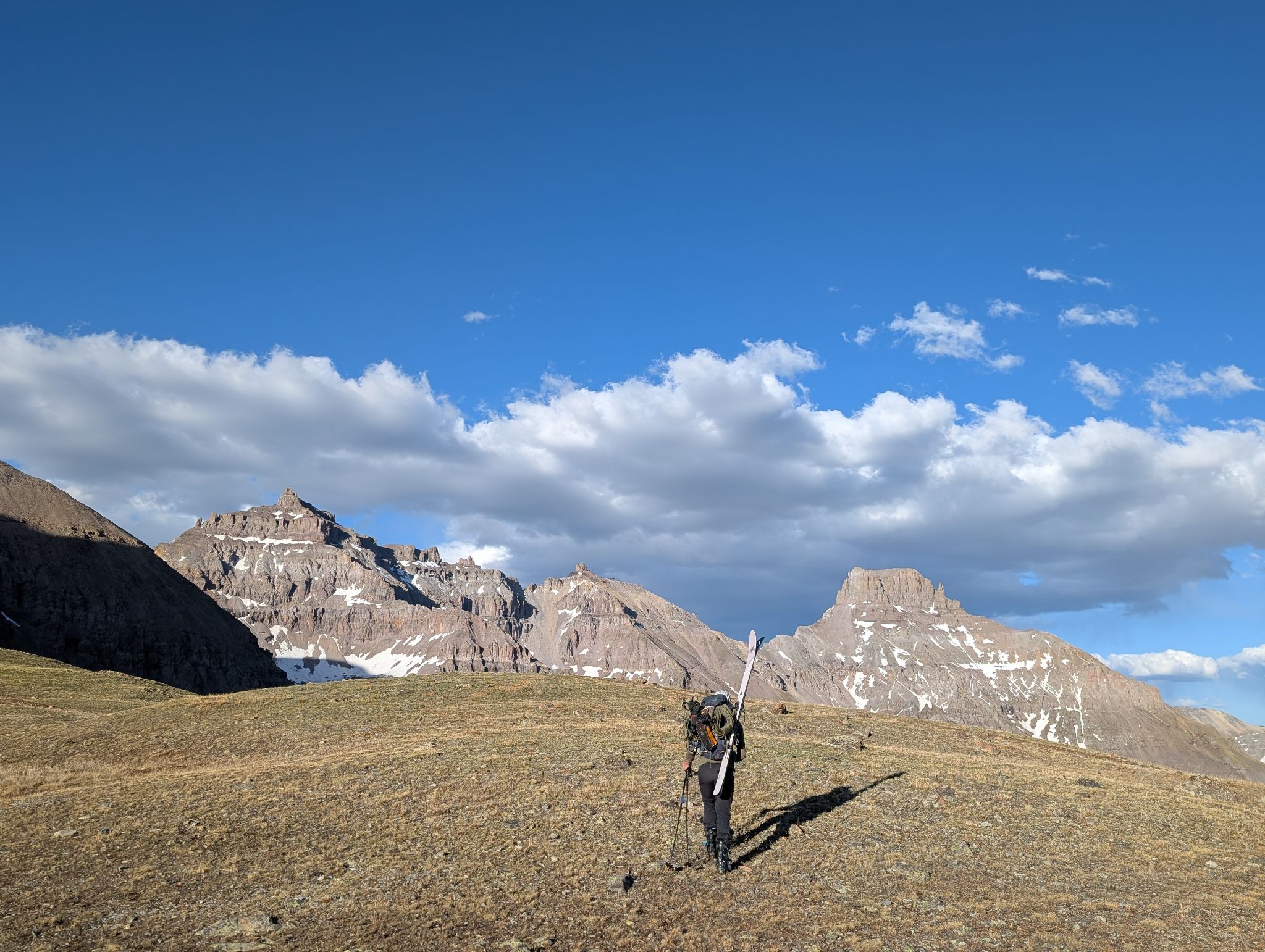
We skinned to the crest at the south end of the Sneffels/Gilpin ridge and skied west into the basin below.
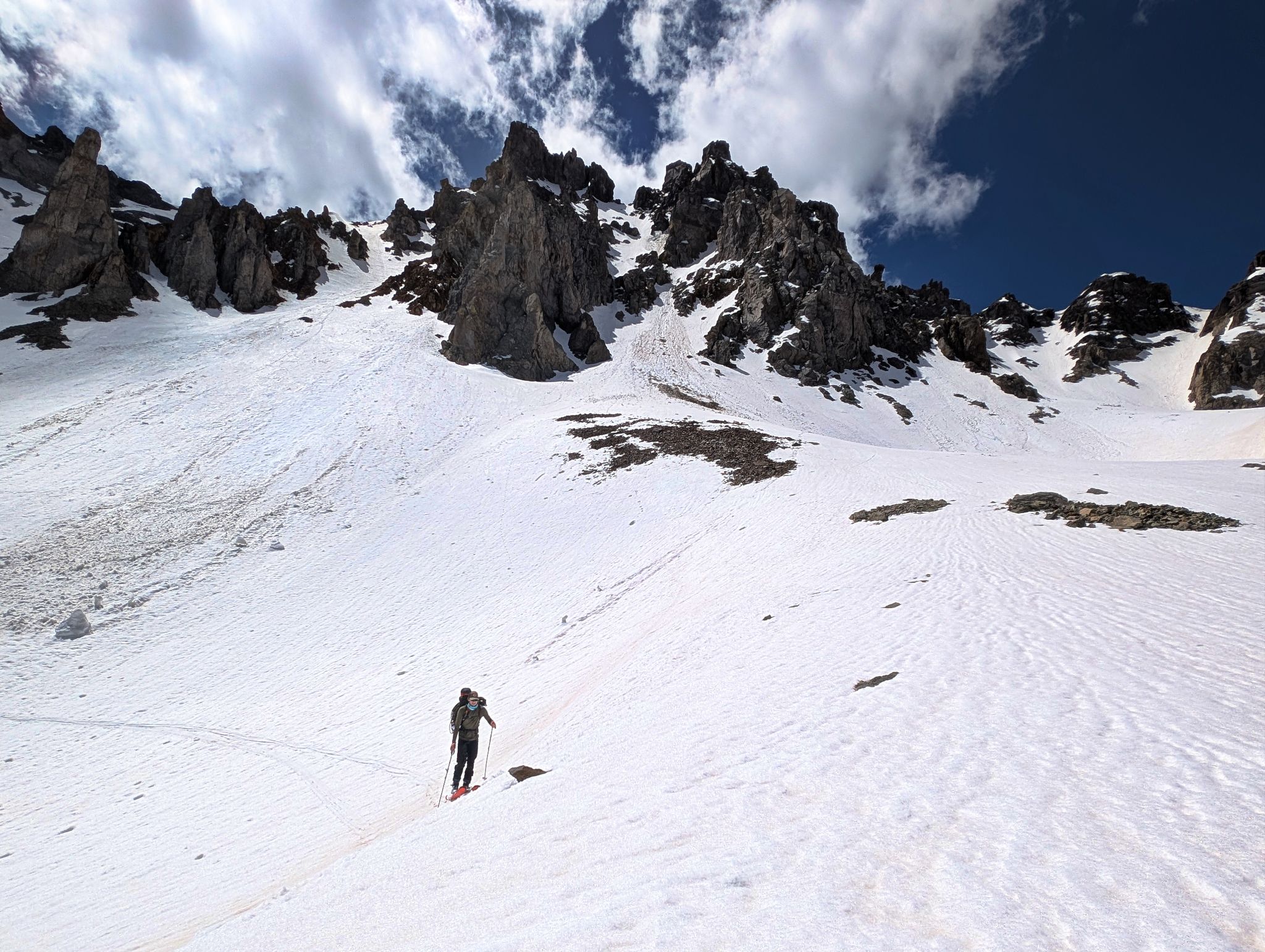
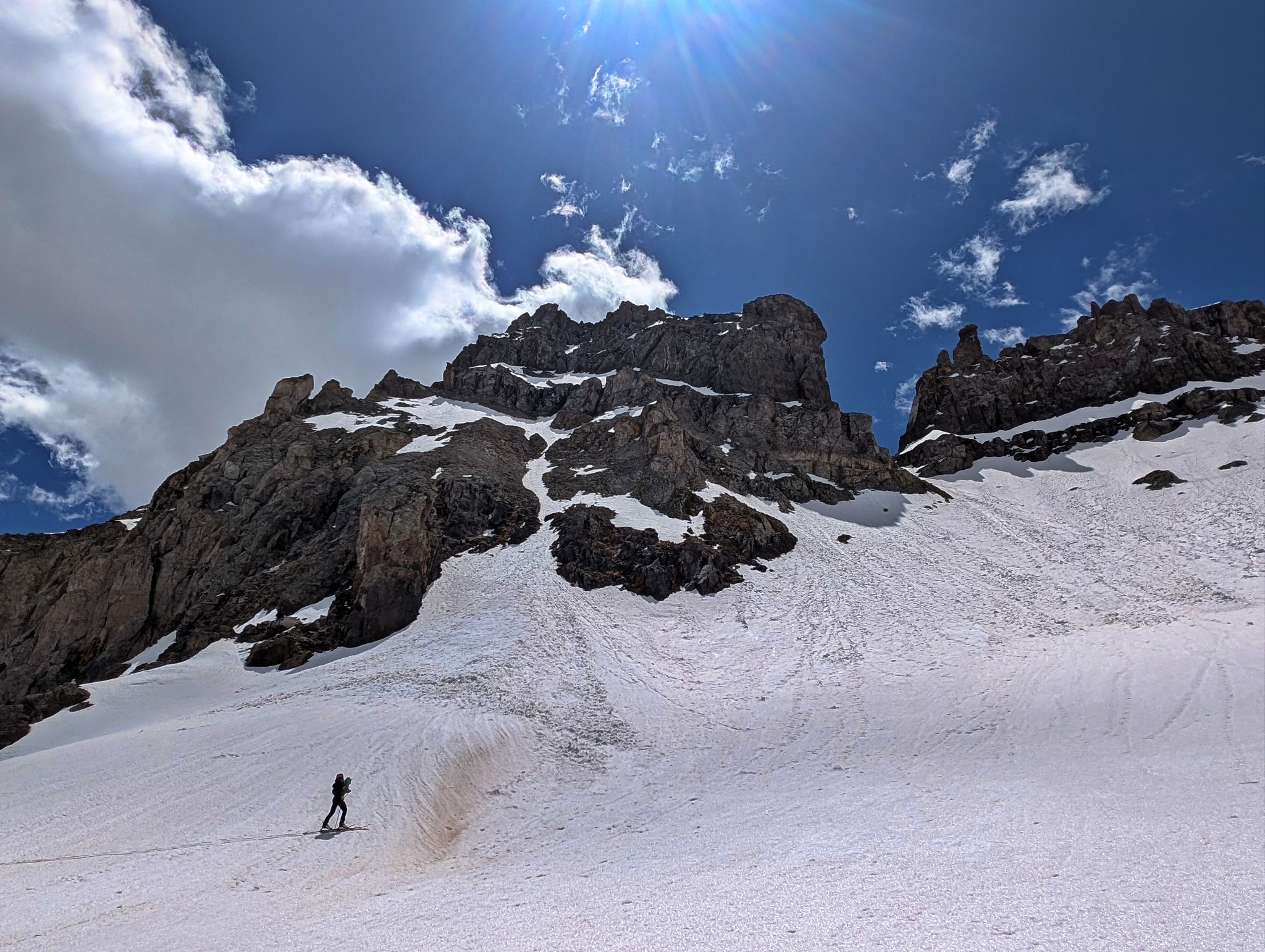
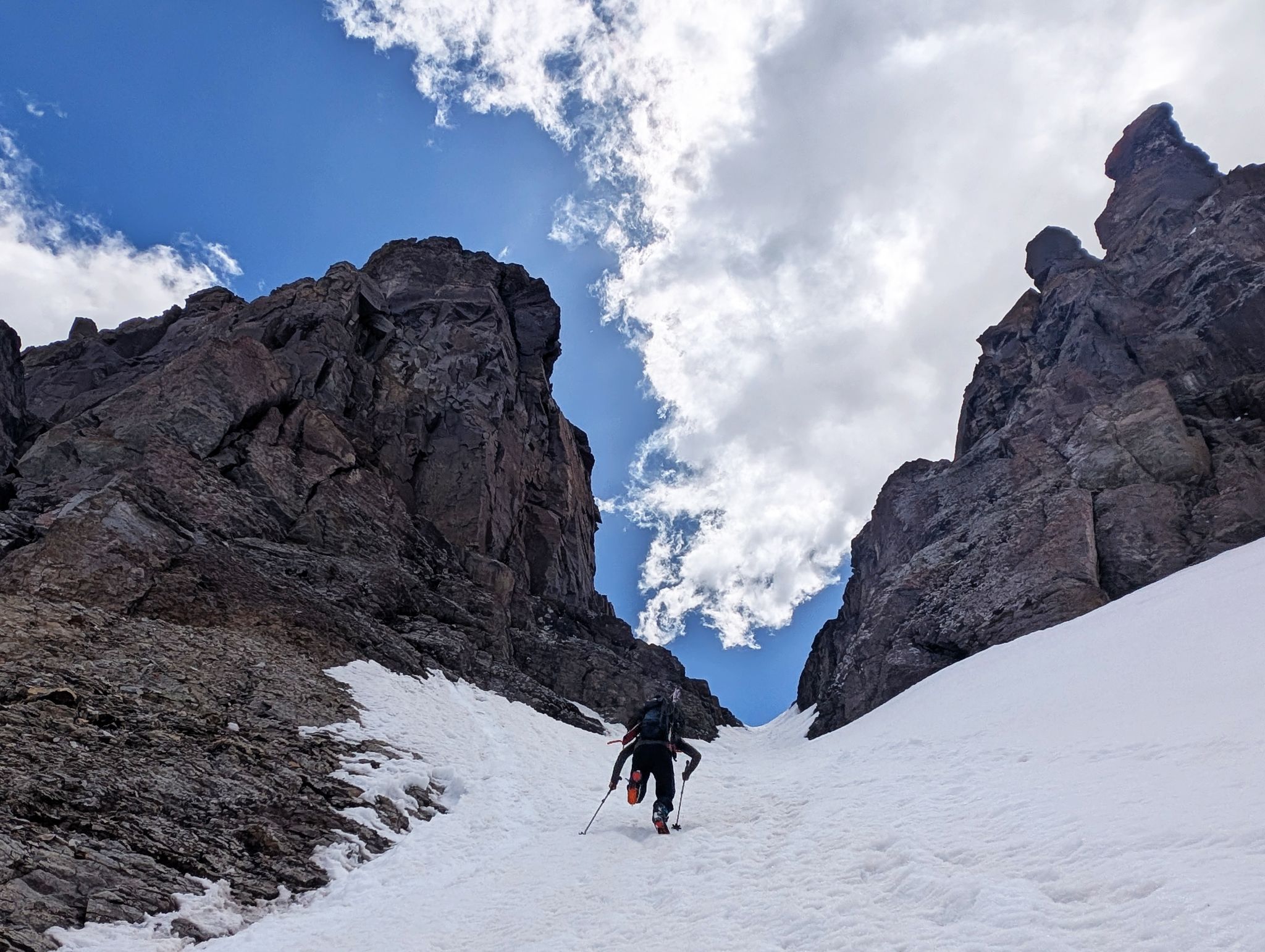
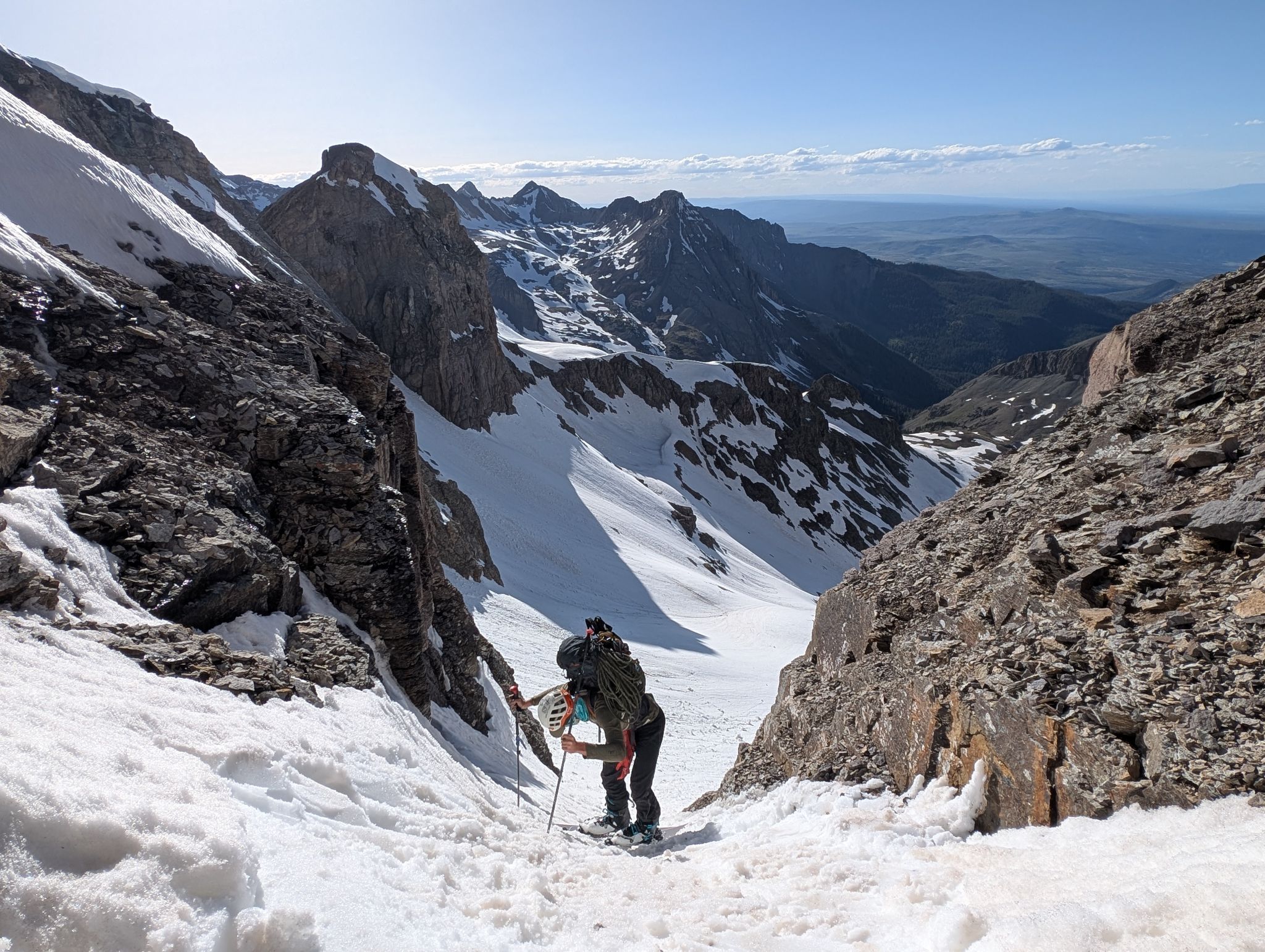
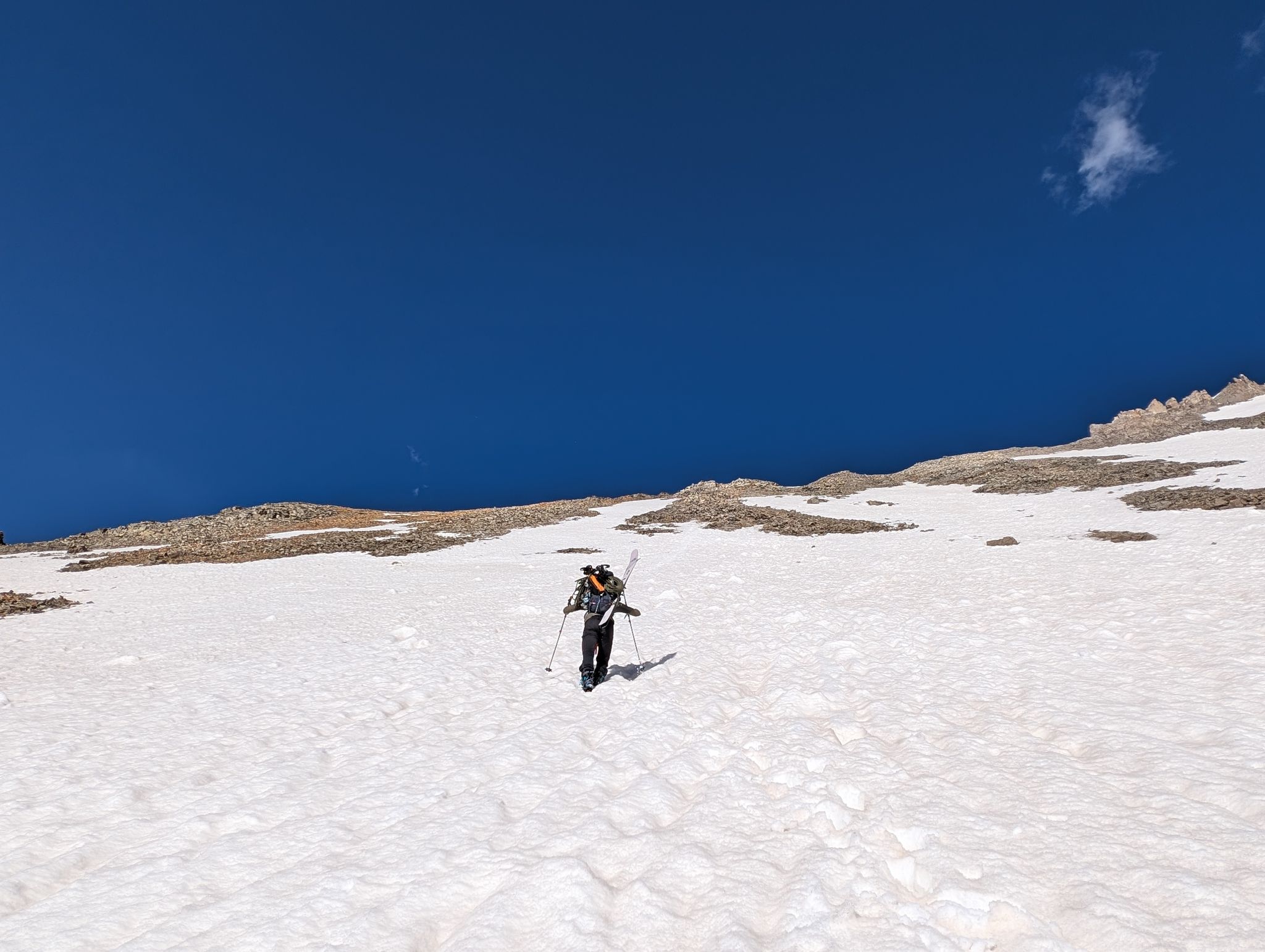
From the basin we skinned to the channel below Gunsight Notch and booted to the base of the climb.
History and Background by Amy Gray-Smith:
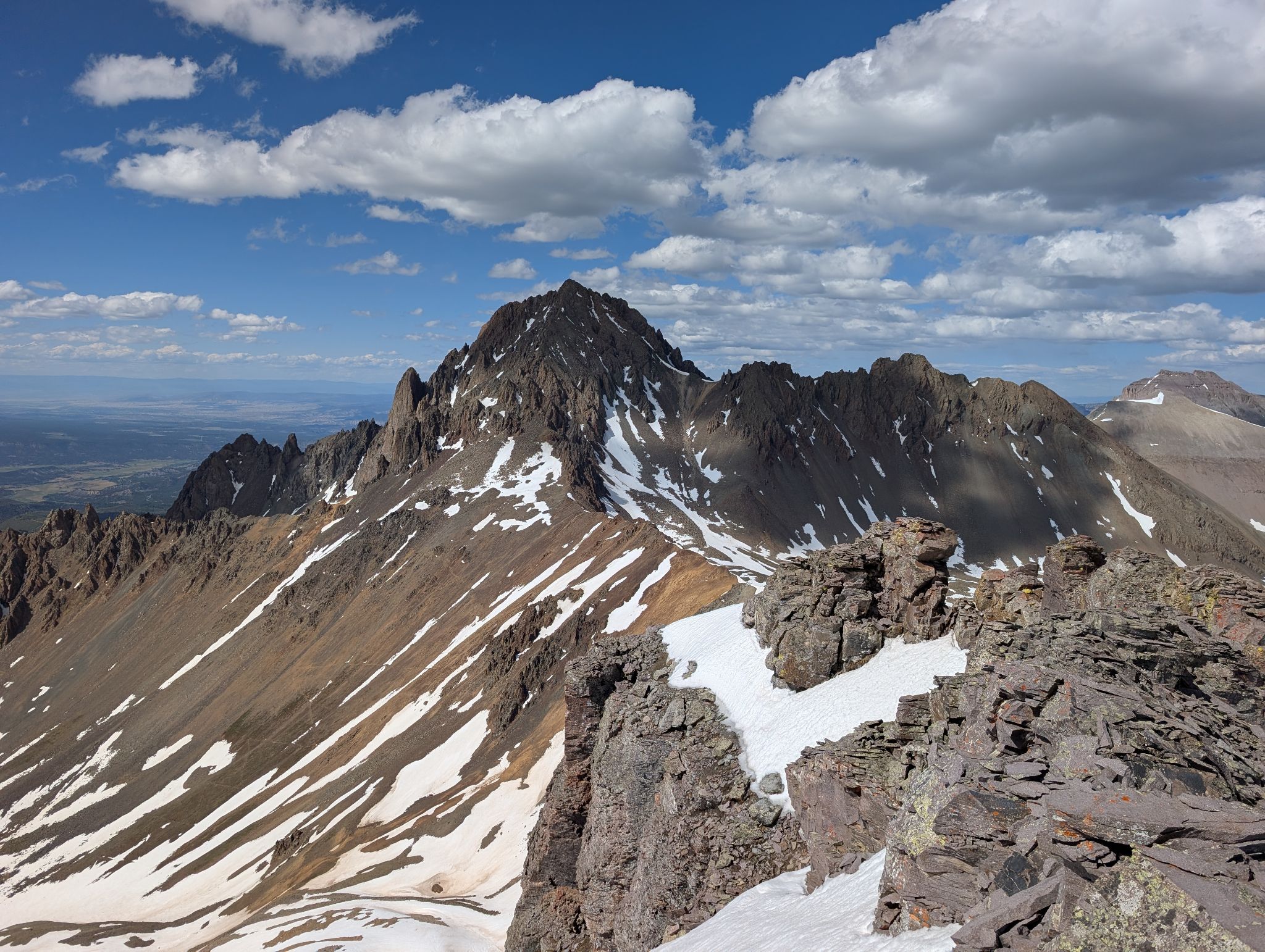
"T3 occupies a strange place in San Juan climbing history. The peak itself is obscure enough that most climbers never think about it, yet for those obsessed with the Dallas Divide Skyline, it became the defining obstacle. Jonny Zaugg’s successful single-day traverse of the entire skyline elevated the Block Tops from forgotten rubble into something closer to legend, and by Jonny’s own admission, T3 was the psychological and technical crux of the whole undertaking. The mountain guards itself with rotten rock, convoluted route-finding, and terrain that feels perpetually one movement away from collapse. It is not difficult in the traditional sense it is difficult in the uniquely San Juan sense, where composure matters more than grades.
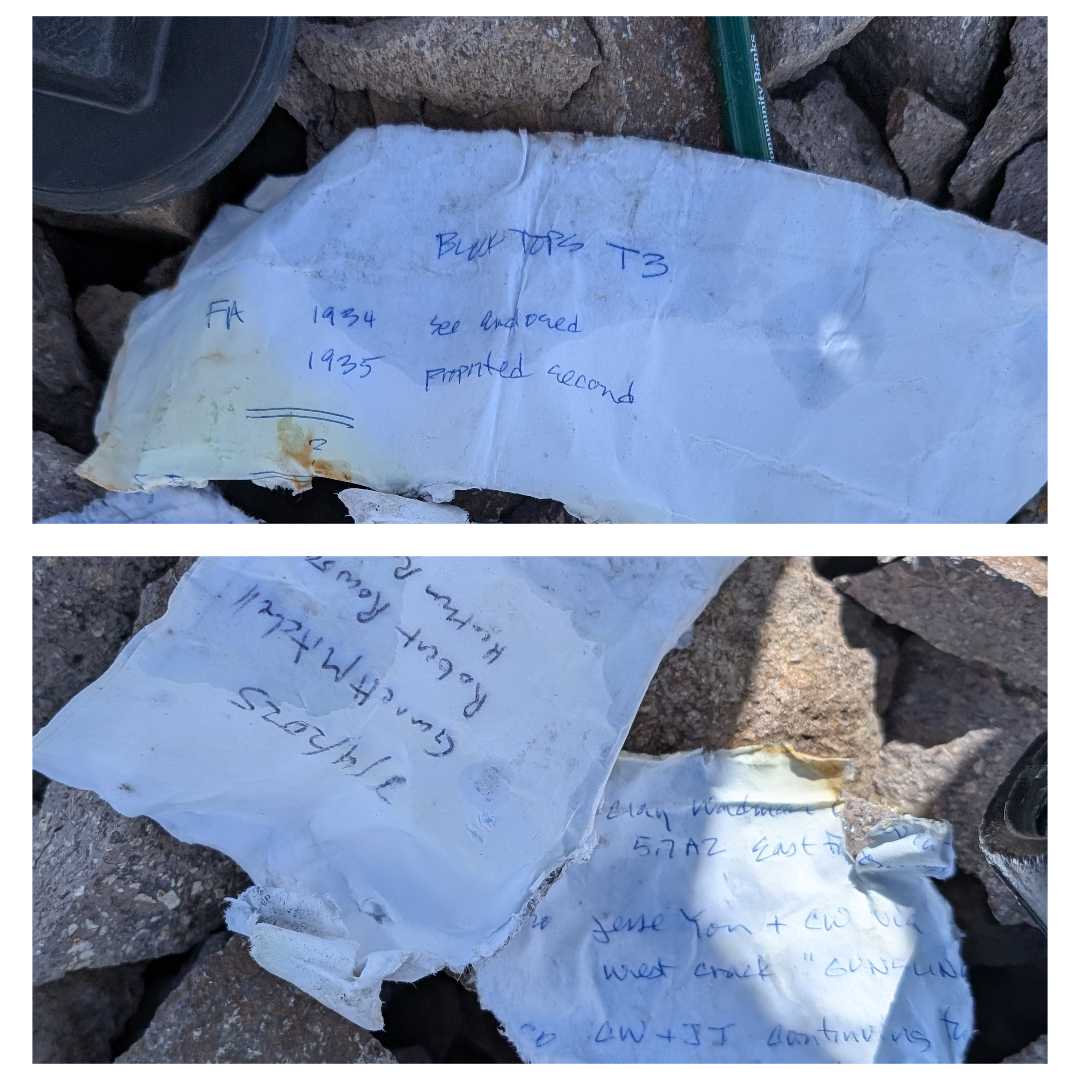
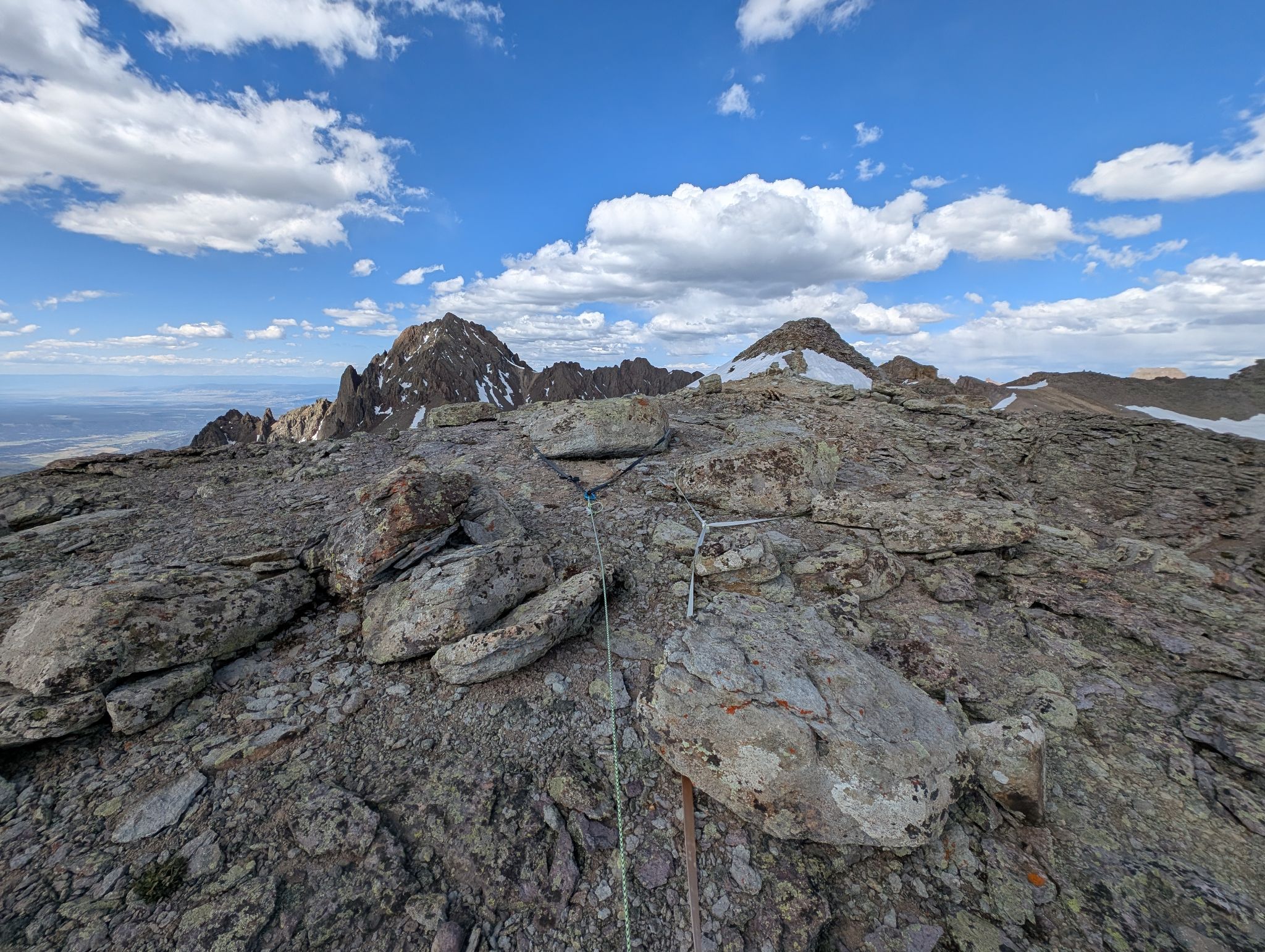
The known first ascent of T3 was made on August 5, 1934, by William Nagel, Robert Blair, Orval Settles, and Robert Thallon, though the exact route has been lost to history. Nearly ninety years later, standing on the summit with Kurt Blair and prying open the ancient summit register, we realized we were climbing with direct lineage to that first ascent party Robert Blair was Kurt’s grandfather. That moment transformed the traverse from a loose alpine adventure into something much larger. The Block Tops suddenly felt less like anonymous piles of volcanic rubble and more like living San Juan history, stitched together across generations by climbers willing to venture into terrain most people would never willingly touch."
More History and Background by Jesse Yon:
Clay Wadman (Telluride local, and creator of the Diamond Productions maps) deserves credit for initially showing me Gunslinger crack, and partnering up to go climb it.
As far as we know / can tell, Clay Wadman and I did the first ascent of the crack on the west face on June 11, 2020.
Clay Wadman and Kevin Cooney (another old western slope climber) climbed the east face of T3 earlier that season, which evidently required some aid.
They rappelled the west face, which is when Clay noticed the Gunslinger crack (and trundled / cleaned it a bit).
He was able to talk me into coming up to lead it, and investigate some other traverse potential. He, like you, saw the Gunslinger as being the best line for a fast and light, relatively safe, free ascent of T3 if doing a larger traverse.
We originally climbed it on June 11th 2020, and repaeted it again with Clay leading as a part of a larger traverse.
A traverse of that part of the range, from Whipple Mountain, over Dallas, Emma, and beyond was evidently a long-time goal of the late Chuck Kroger (original mind behind the Telluride Via Ferrata). Part of his vision, and theirs, was staying head-and-shoulders above the ridge, or at least within a stone's throw of it.
Jesse later provided some background on the Gunslinger name...
"I think we called it Under the Gun, a play on the Gunsight Noth that it sits in, but maybe Clay wrote Gunslinger in the register."
Climbing Gunslinger by Jack Van Lancker:
Gear:
* A double rack .2-3 and 1 #4 plus a couple of stoppers
* Two 70m ropes (two 60m ropes would also work)
* 30ft+ of webbing and cord as the anchor needs to be extended to avoid getting your rope caught
* Rocky Talkies
From the bottom, Gunslinger Crack already looked like it could pose more difficulty than the “5.9-5.10” I thought I would be climbing.
After considering two different cracks, I decided the solid crack to the right of the pillar was the best option, as opposed to a .5-.75s crack off to the right, based on doubts of the pillar’s stability.
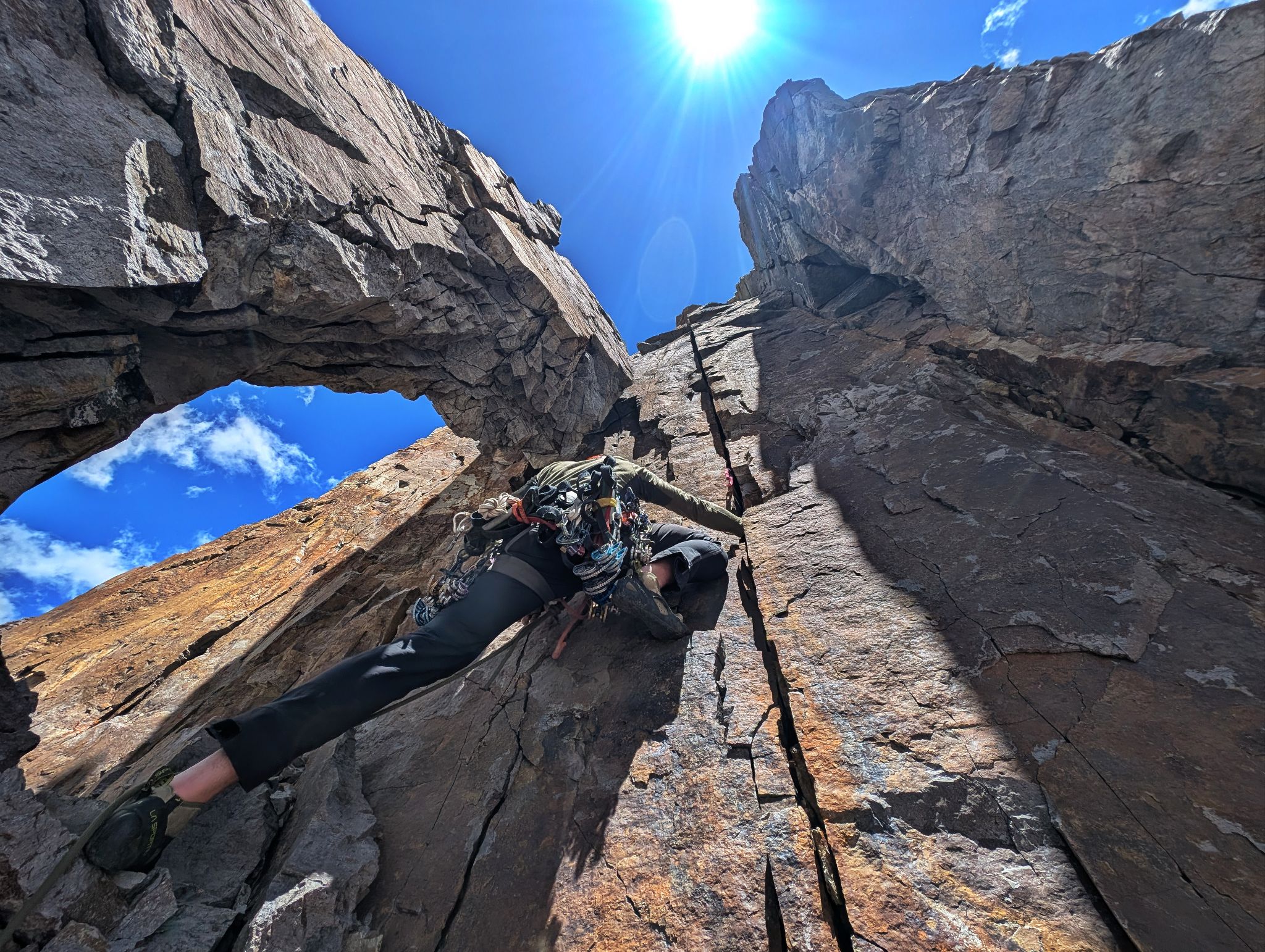
Ultimately, the pillar felt solid enough to withstand some chimney/stemming moves while I placed gear (2s&1s) up the starting crack. Although, if it were to collapse, it would be catastrophic for Alex.
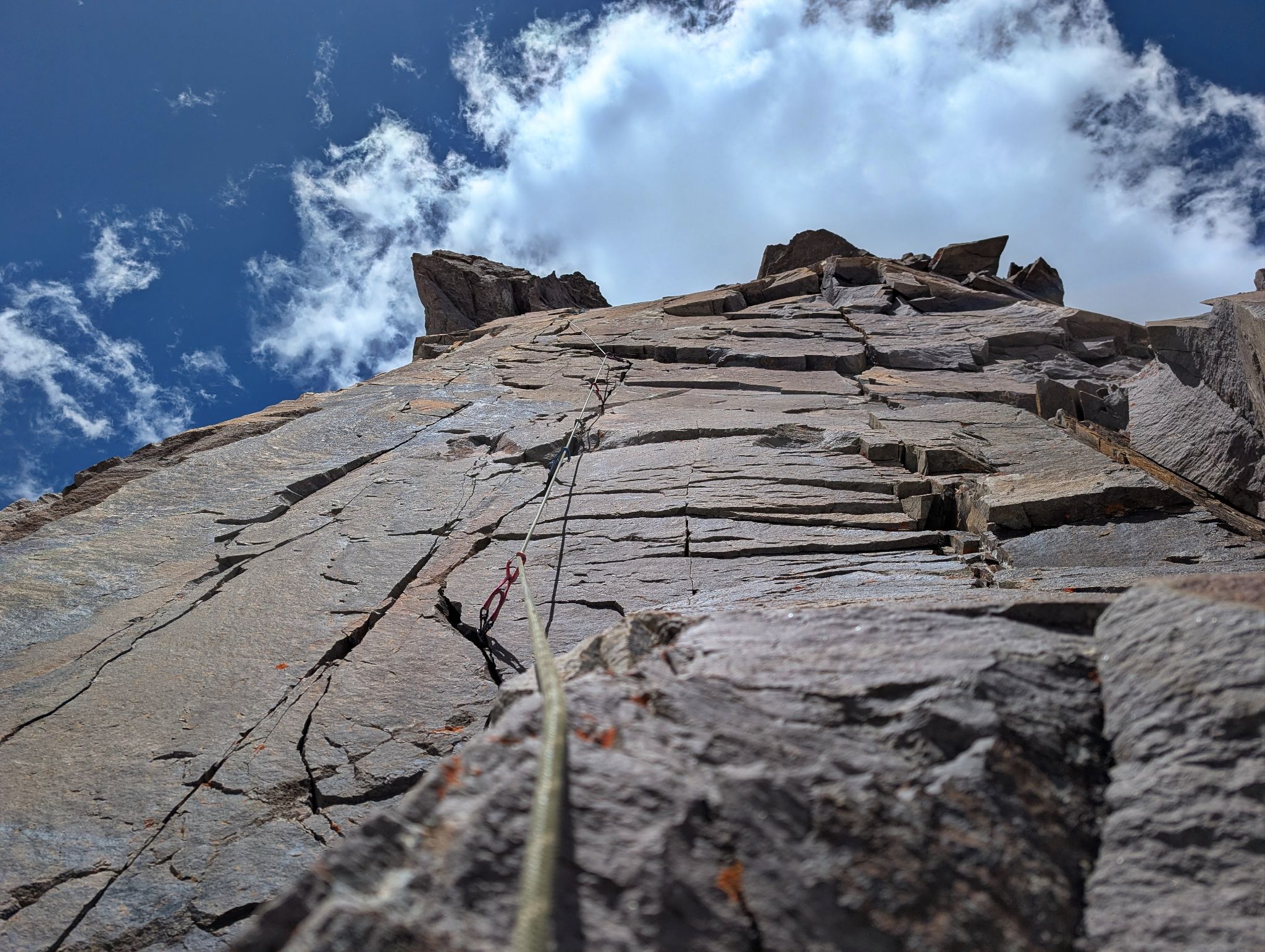
After pulling out of the initial crack (5.8-5.9) by way of standing on the pillar, I had a #4 placed high that I would NOT recommend. The placement ran the rope to the left trending crack over a sharp edge, and, in our case, pulled a large brick sized rock off the route and sent it within a foot of Alex’s head as he belayed.
Ideally, gear should be placed further along and from a good stance below the steeper finger crack.
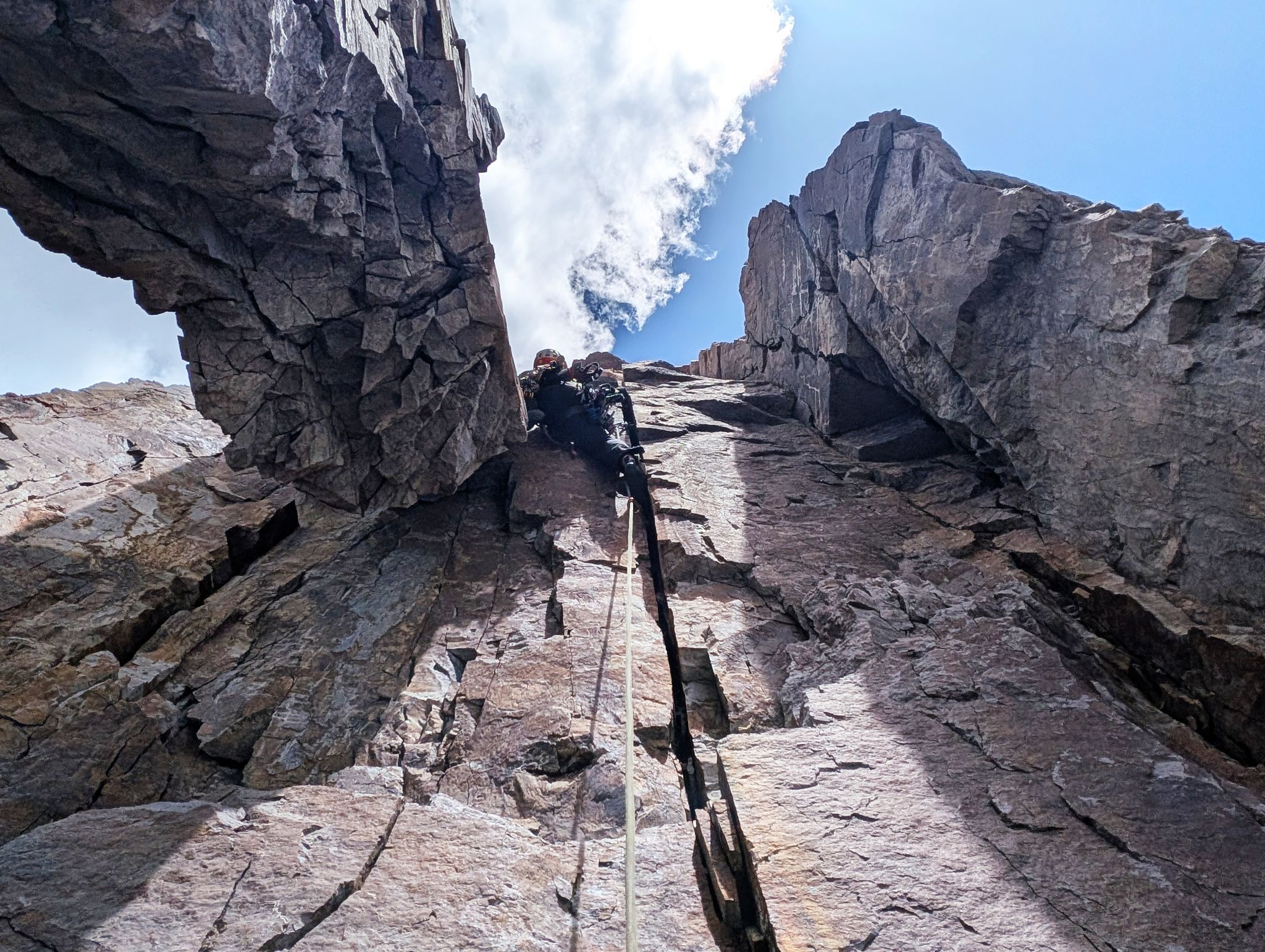
After aiding a few moves in the finger crack (small stoppers and sizes .2-.5) the route turns into a very good 5.9ish 2-4s crack that thins to .75s. From there and near the last moves the rock quality worsens as the terrain eases.
Although I aided the crux, using my hangover as an excuse to brush off free climbing, I felt the crux section goes in the 5.10-5.11 range, as opposed to the 5.9-5.10 I expected.
My first move from the crack onto easy terrain, I pulled out a basketball sized rock and wrestled it to ensure it didn’t fall on the rope or Alex below. I then yarded on a different jug of questionable stability to step up onto 5th class terrain.
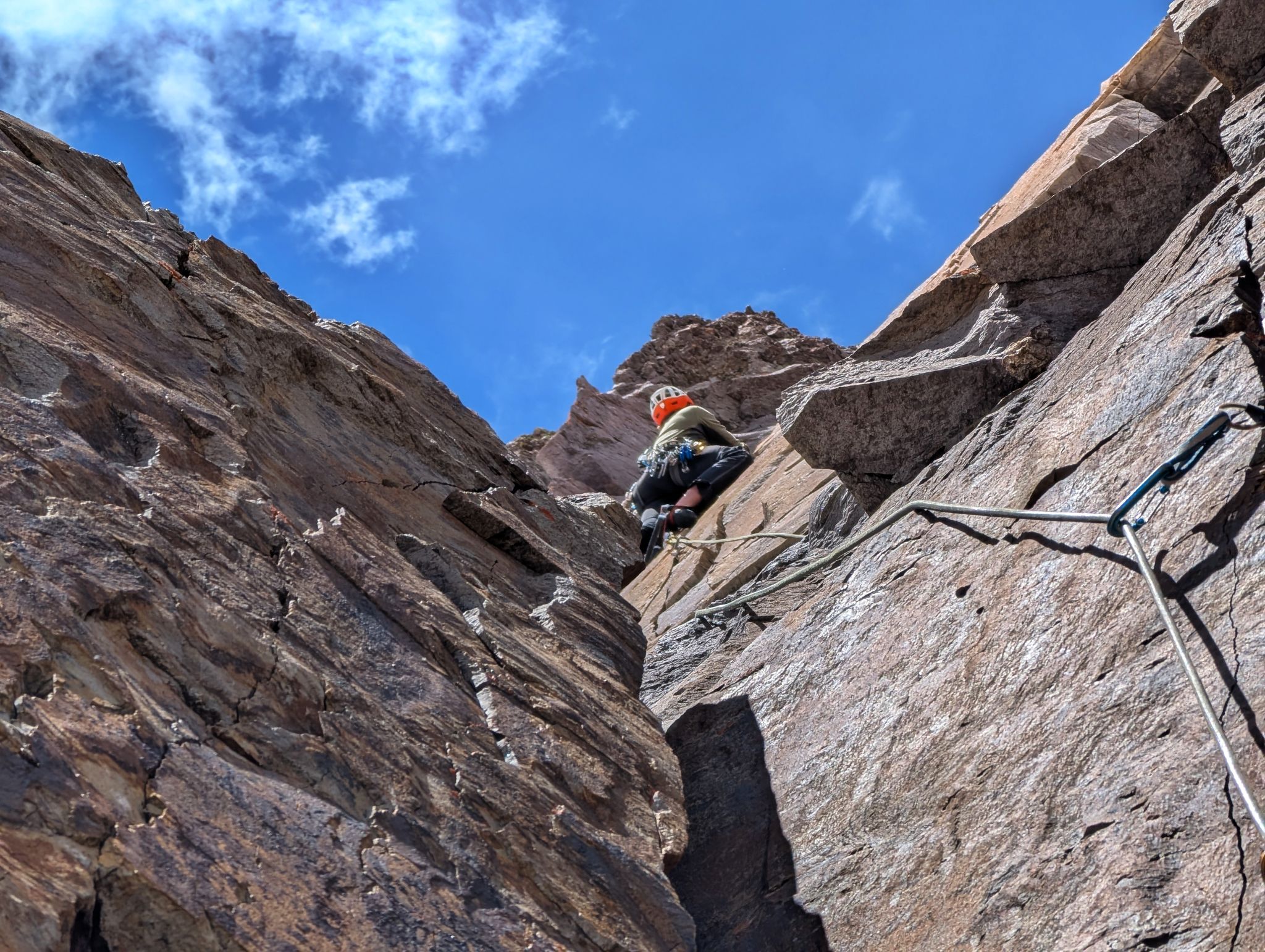
From the end of the more difficult climbing to the summit, I did not place any gear except for a #2 directly above and slightly to the right of the terminus of the steeper climbing.
This ensured the rope wouldn’t rub too much on the remarkably sharp rock when weighted by Alex.
The de-sheathed stuck rappel ropes, from the July 2025 party, to my left from the anchors were a reminder to run our rope in a safe and organized manner and with consideration of rockfall potential.
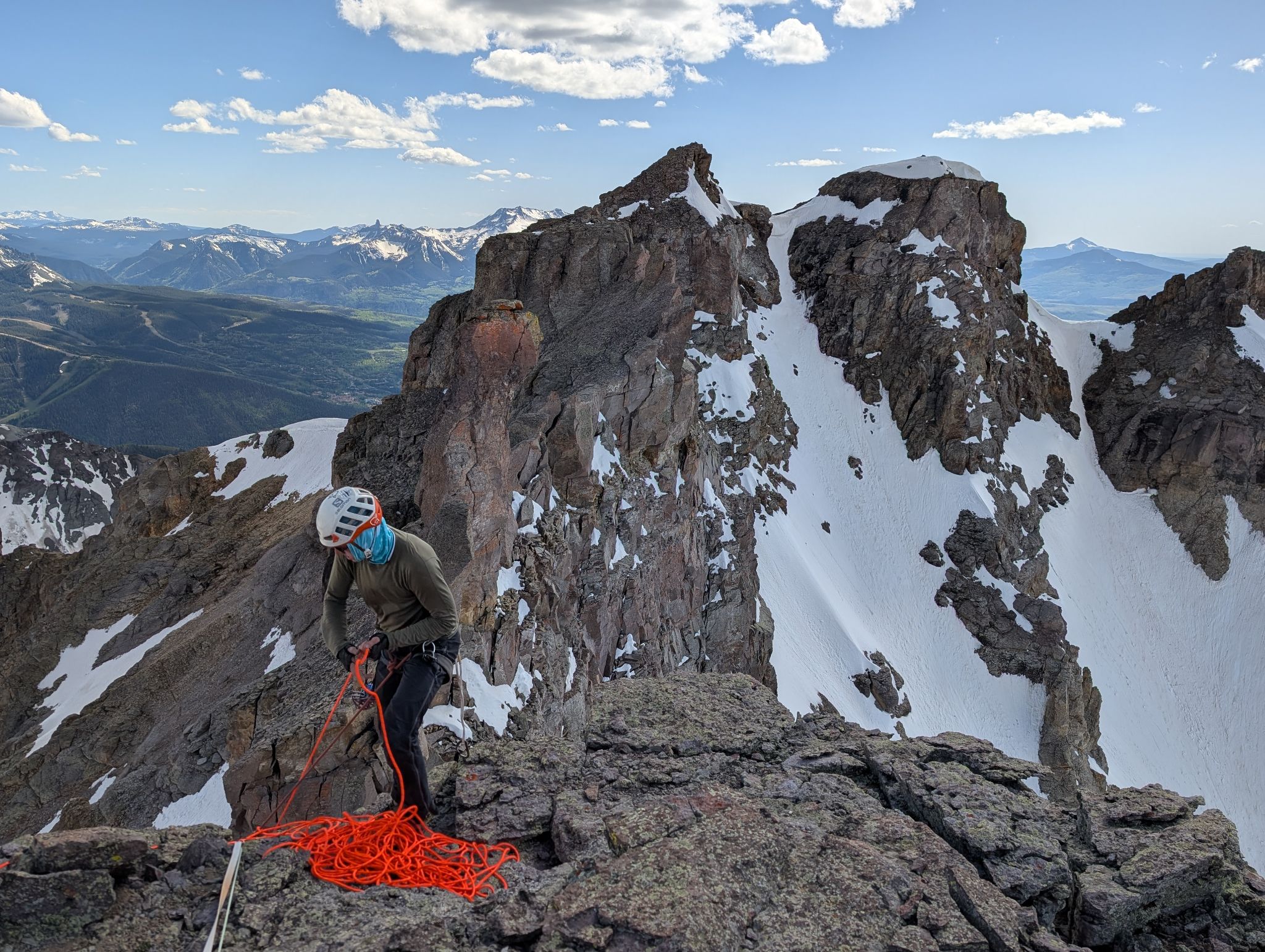
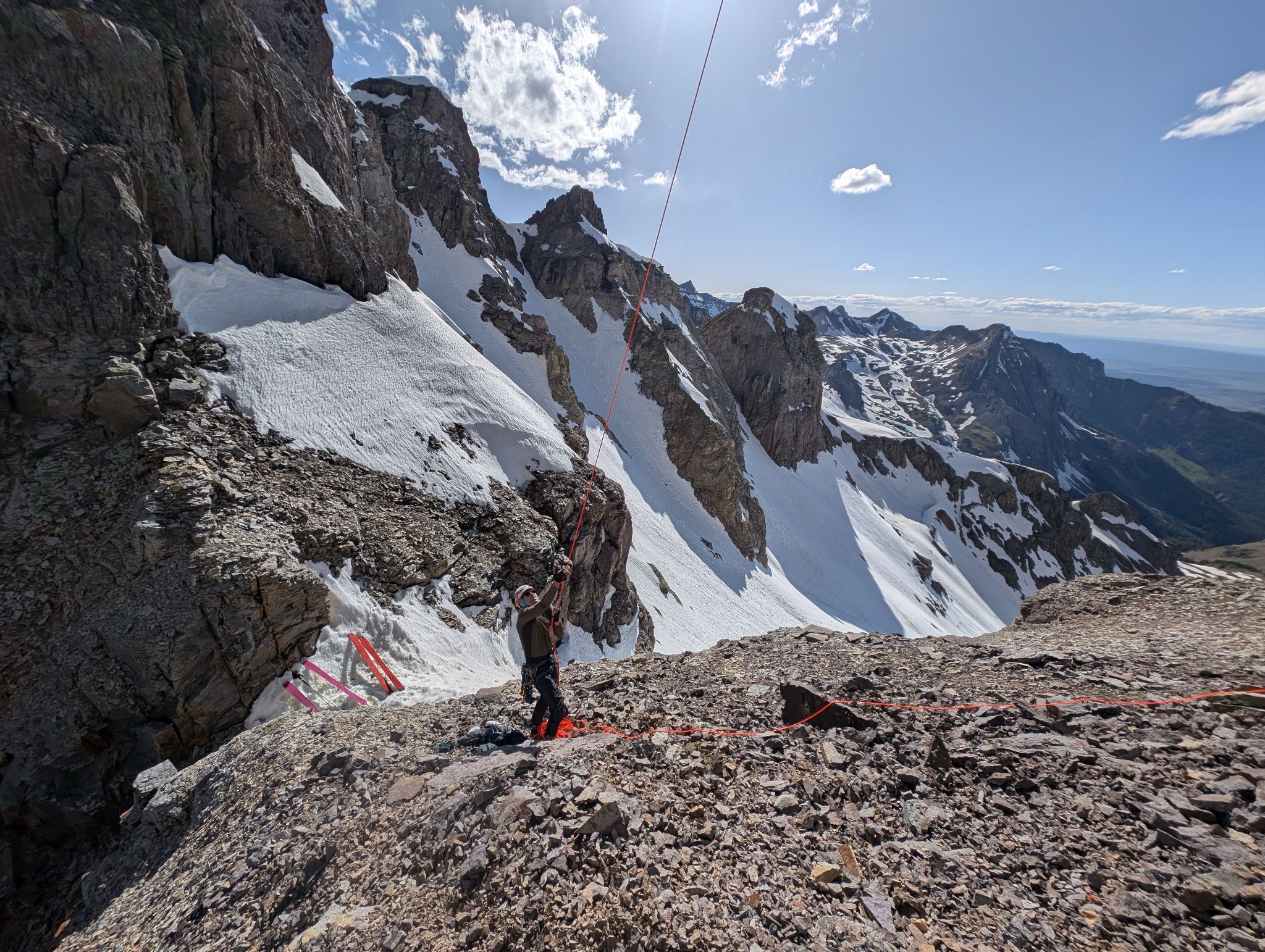
From the top, I was able to flick the rope over the wall above class 4/5 terrain. I fixed the rope to the anchor in a manner that would be safe for ascending.
Once Jack was on the summit I knew I would not be able to follow a crack in the 5.11 range. So for the first time ever I set up my jugging system and enjoyed an easy rope ascent on an incredible 50m pitch to one of the most rewarding summits to date.
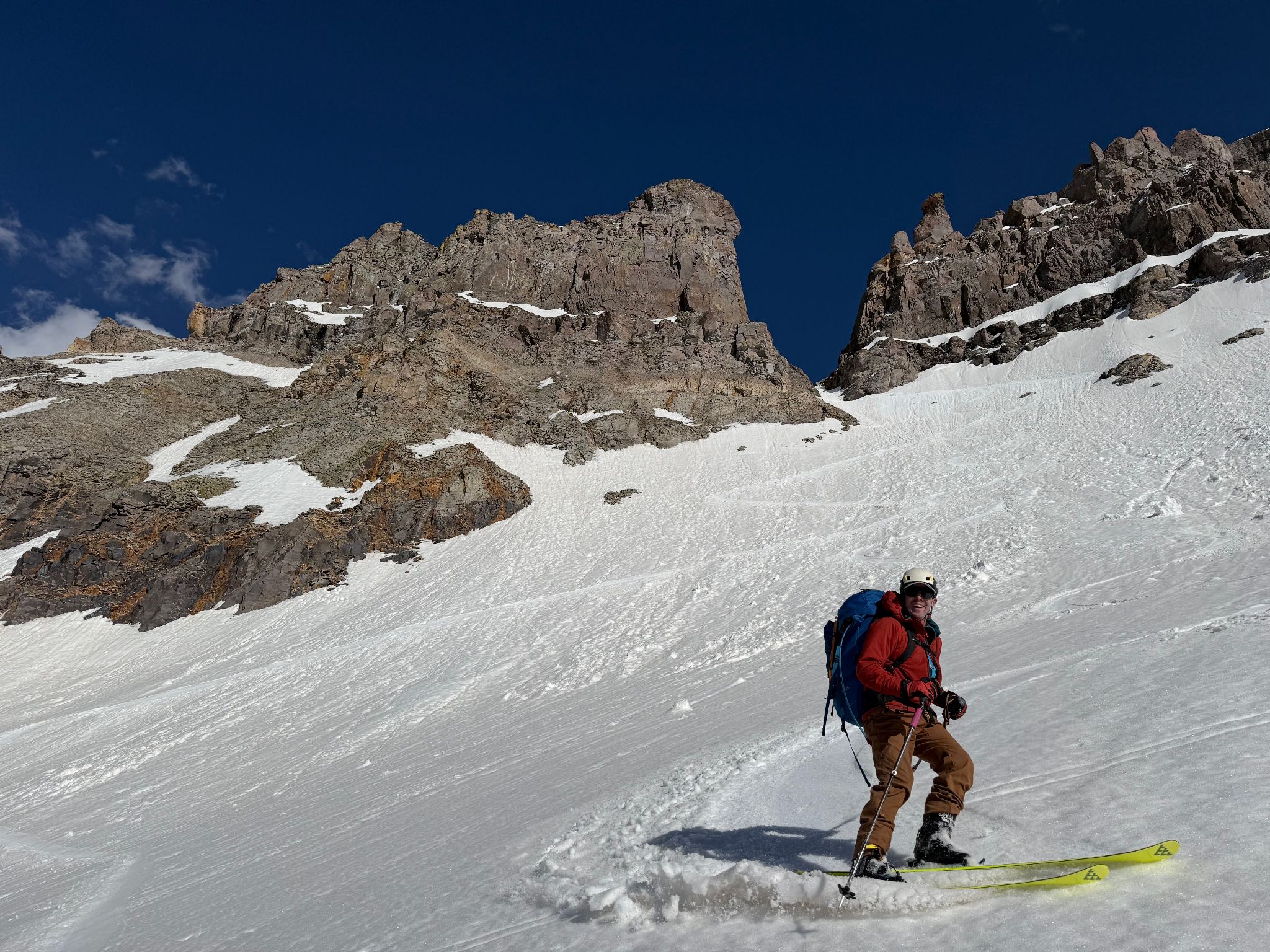
After some quality time on the summit, we extended the rappel anchor another 10ft, descended to the base of the climb and skied some stellar corn back to the truck.
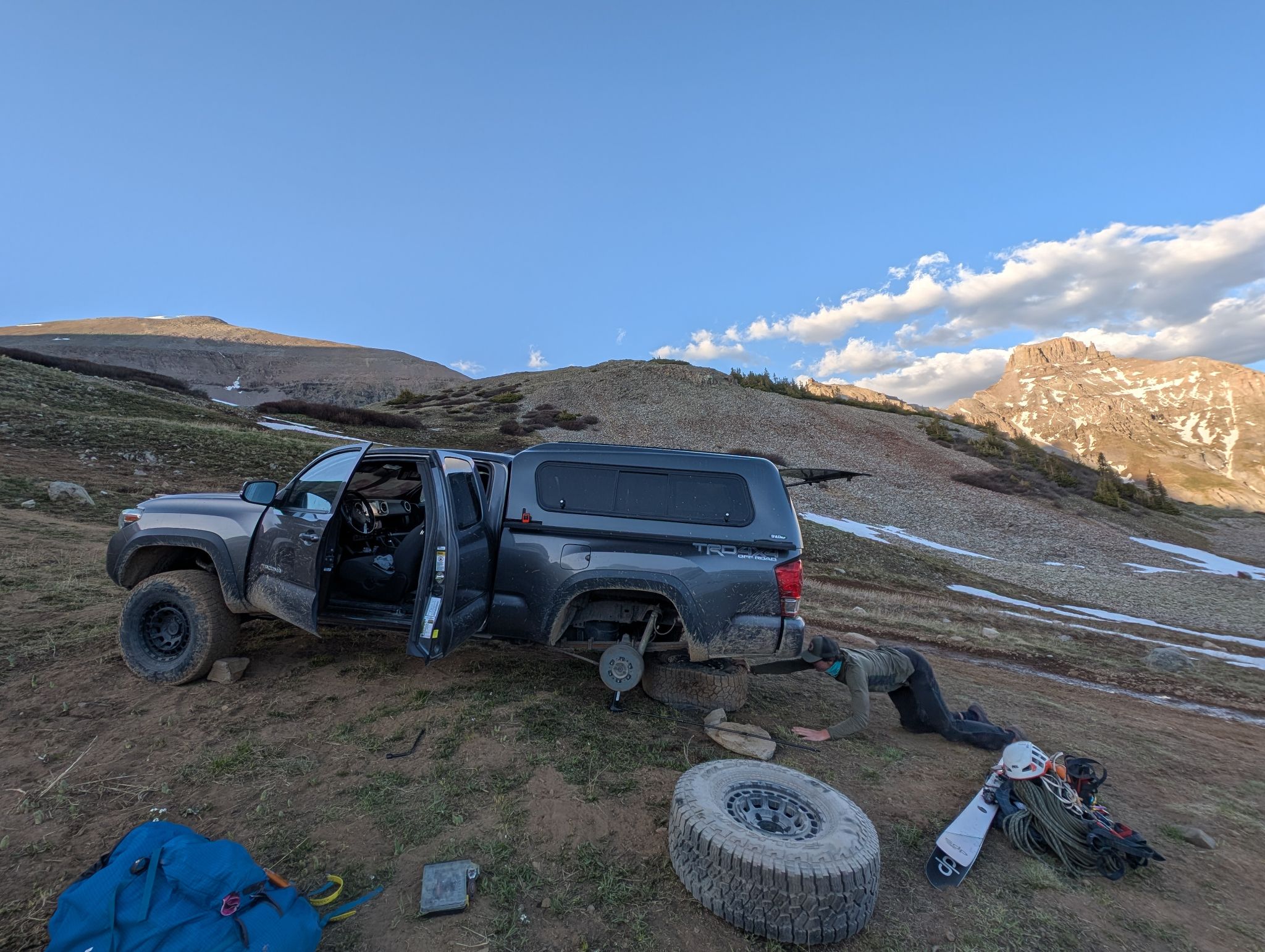
When we reached the truck we were greeted with a flat tire. A frantic search for the lug key ensued.
We were able to change the tire and drive the sporty road back to Ouray before dark.
Climbing T3 was an incredibly rewarding day.
Patience and process transformed my impression of T3 from a dangerous and daunting mountain to one of reward, joy and fun.
I hope to return in the years to come and share the adventure with others.
![T3 gunslinger west crack 01]()
5m - 2200ft - 9hrs
![T3 gunslinger west crack 02]()
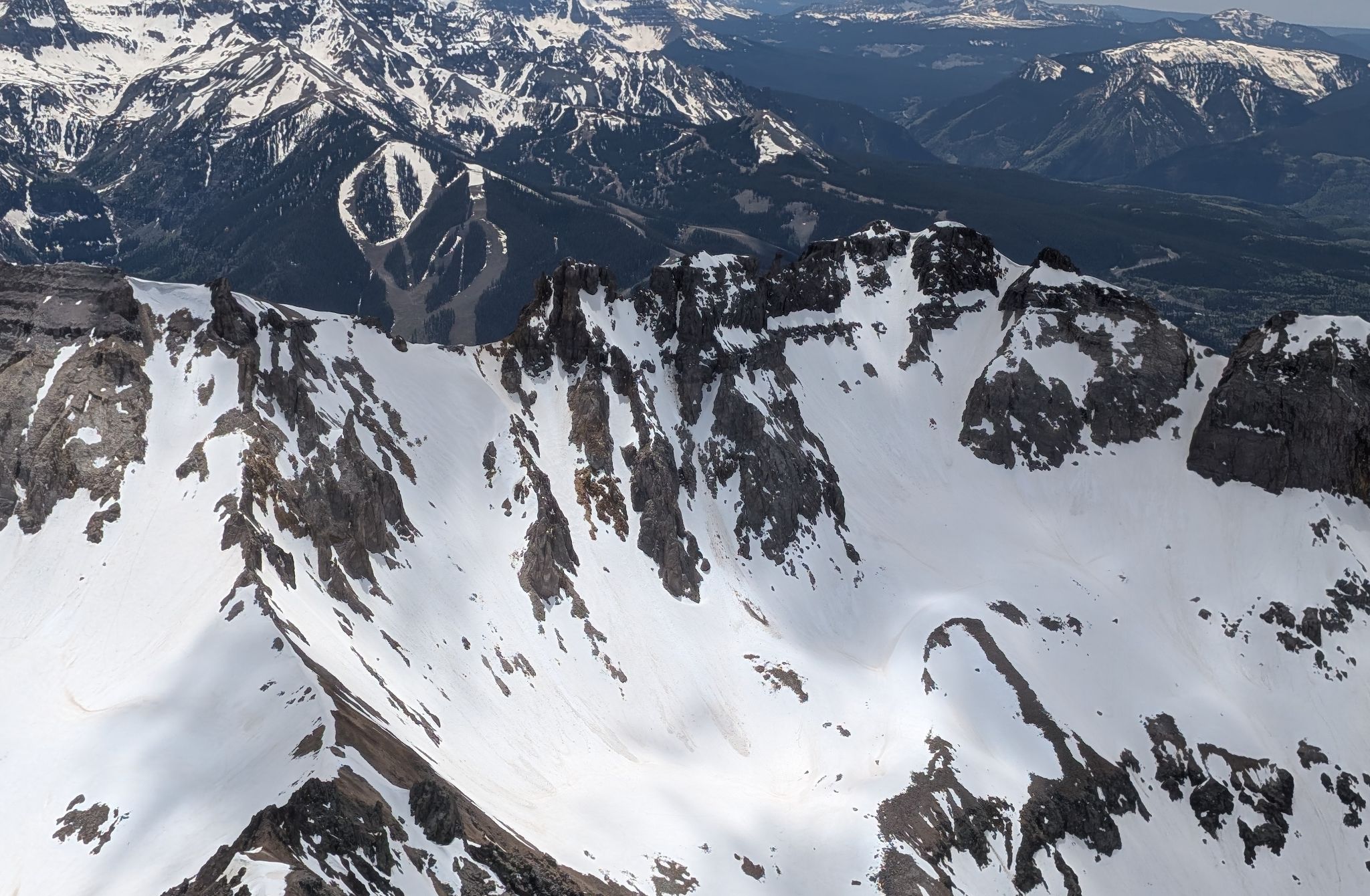
A view of the Block Tops from Sneffels SW Ridge two days before our climb... snow looks prime to make this a ski mission
![T3 gunslinger west crack 03]()
After driving within a half mile of Yankee Boy's upper TH, we skinned to the south side of the ridge shared by Sneffels and Gilpin
![T3 gunslinger west crack 04]()
There was some loose terrain to navigate on the west side of the Sneffels/Gilpin ridge before we could transition to skis
![T3 gunslinger west crack 05]()
Jack skis the west side of the Sneffels/Gilpin ridge
![T3 gunslinger west crack 06]()
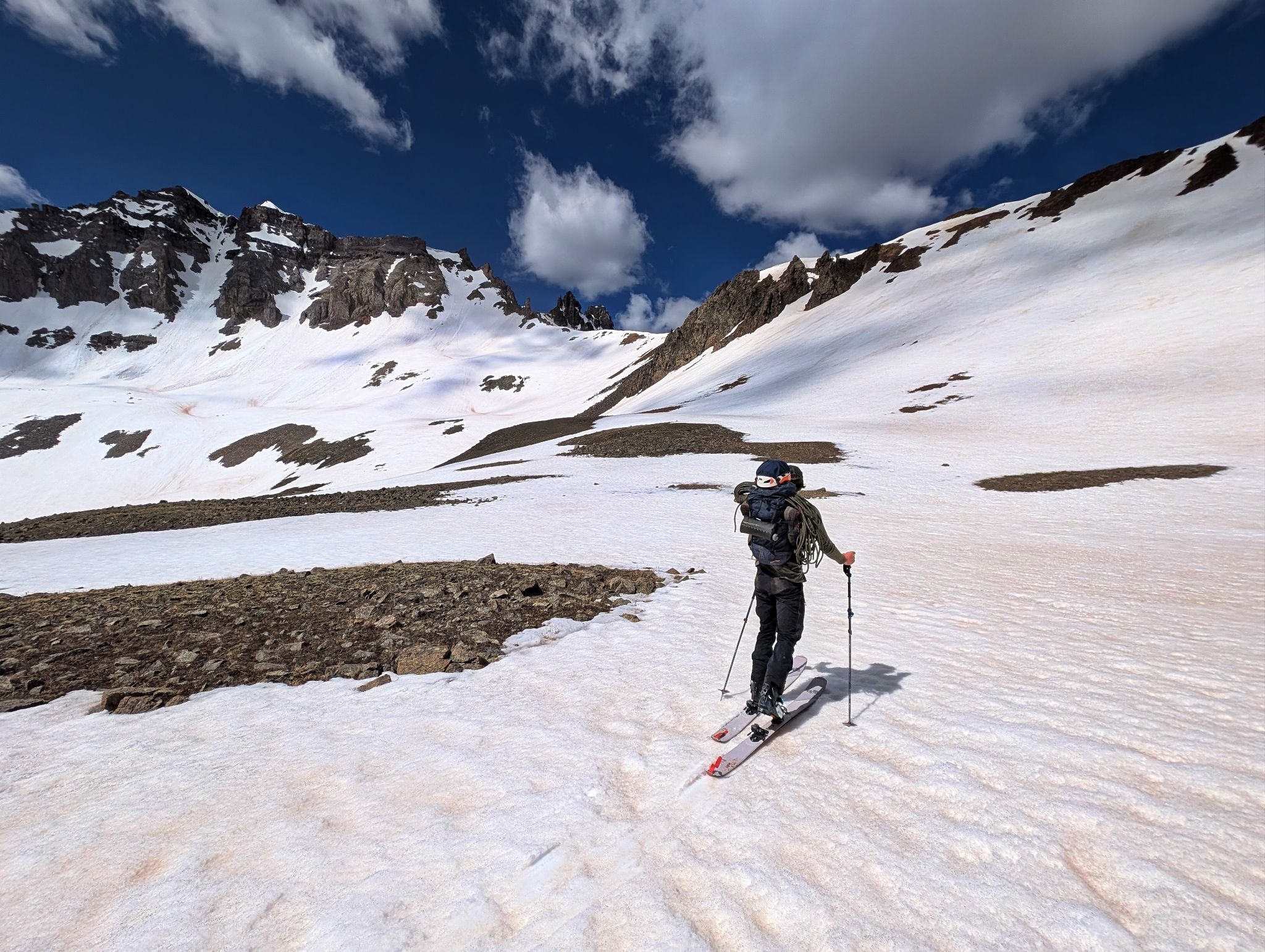
Touring into the basin below T3, T2 and T1
![T3 gunslinger west crack 07]()
![T3 gunslinger west crack 08]()
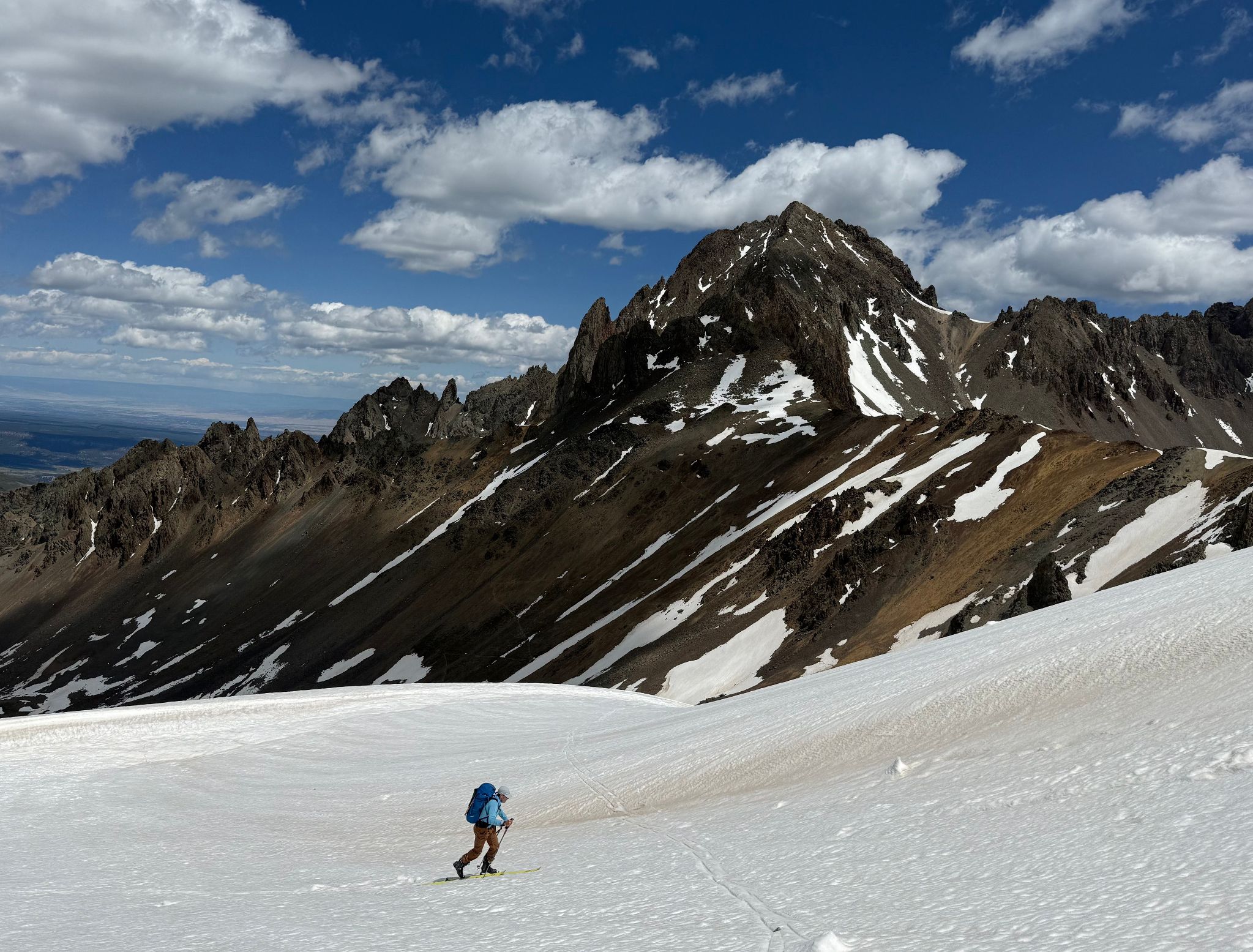
The views were nice if you like that kinda thing
![T3 gunslinger west crack 09]()
Wrapping around to Gunsight Notch which divides T3 and T2
![T3 gunslinger west crack 10]()
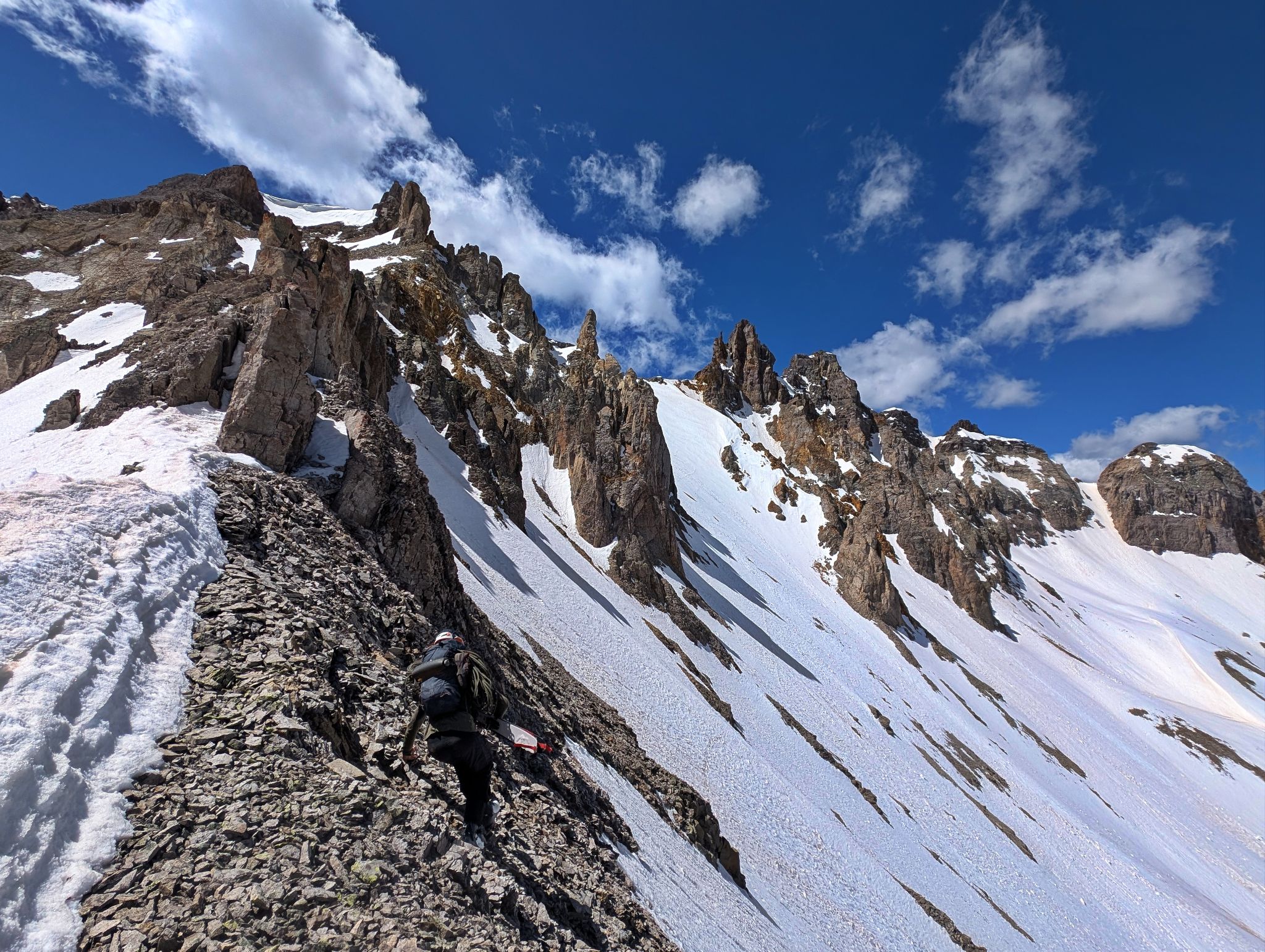
Booting to Gunsight Notch at the base of T3's west crack known as Gunslinger
![T3 gunslinger west crack 11]()
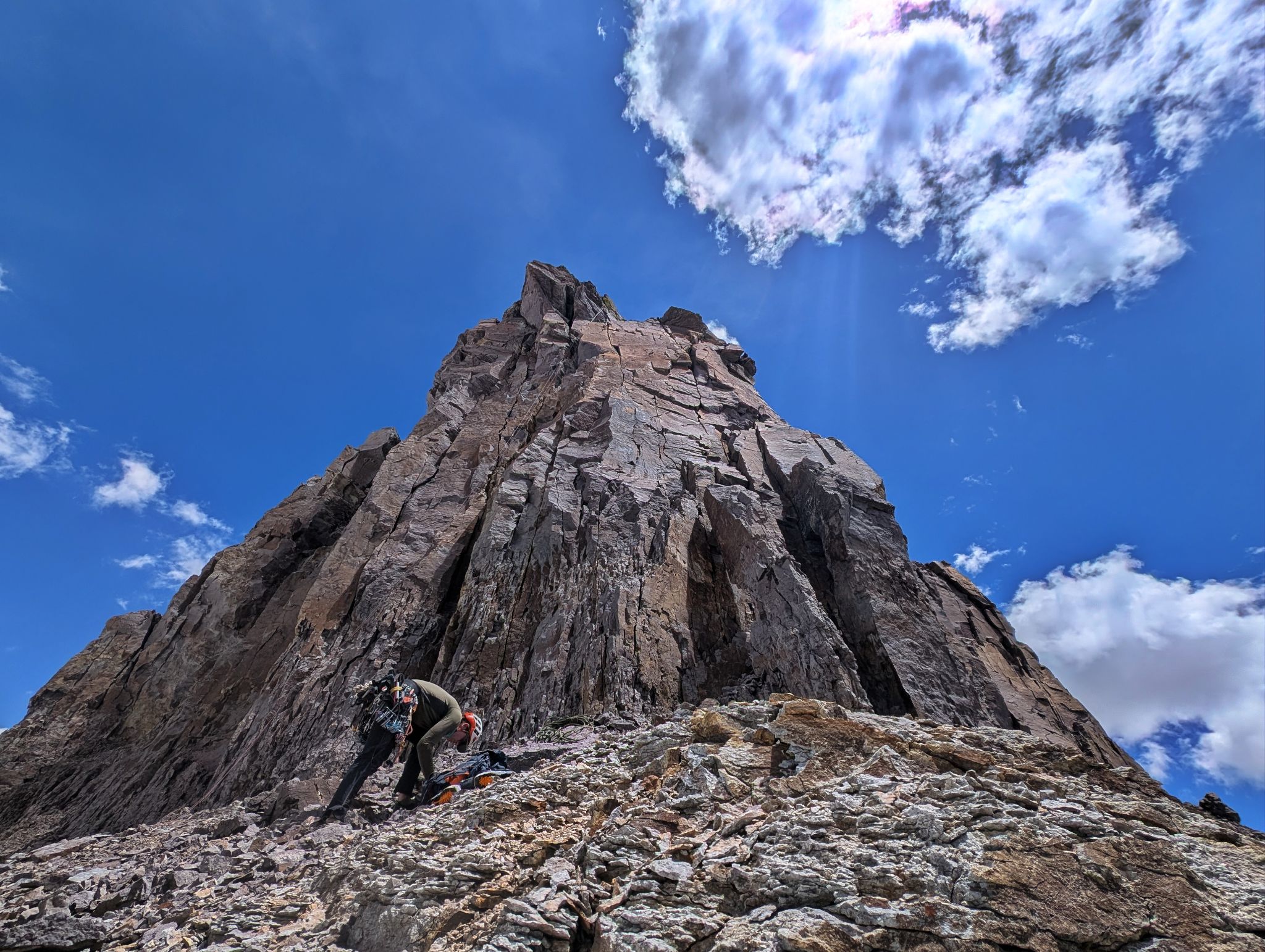
Preparing for the 50m climb up Gunslinger Crack to the summit
![T3 gunslinger west crack 12]()
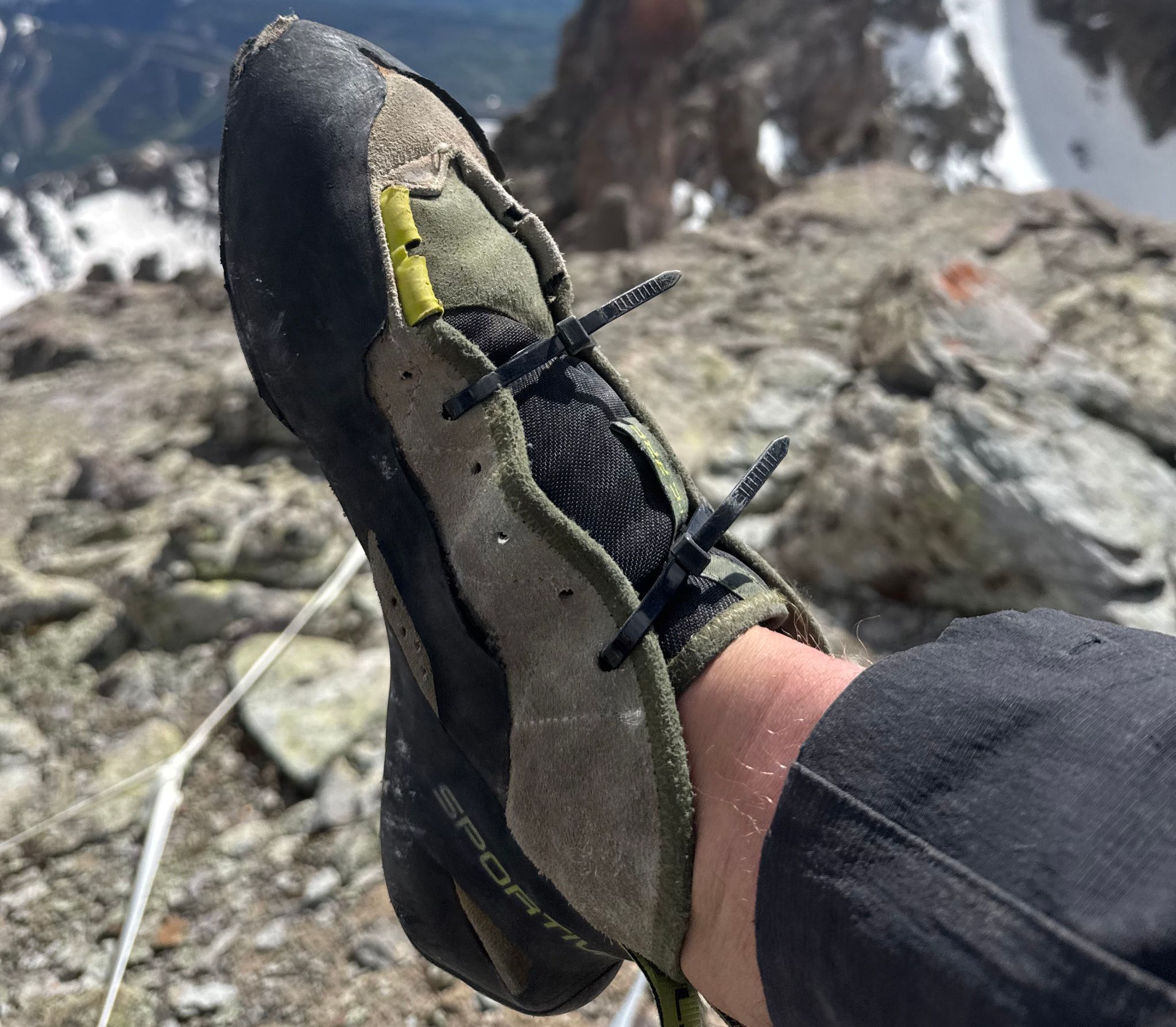
In case it gets stiff... Jack laces'em up nice and tight
![T3 gunslinger west crack 13]()
The first bit of the climb is a nice hand crack that goes at a stiff 5.8... arguably 5.9
![T3 gunslinger west crack 14]()
Jack traverses left at the top of the 5.8/5.9 section. An extension would be nice here, however it would have exposed the rope to sharp rock
![T3 gunslinger west crack 15]()
Higher on the climb Jack transitions to aid
![T3 gunslinger west crack 16]()
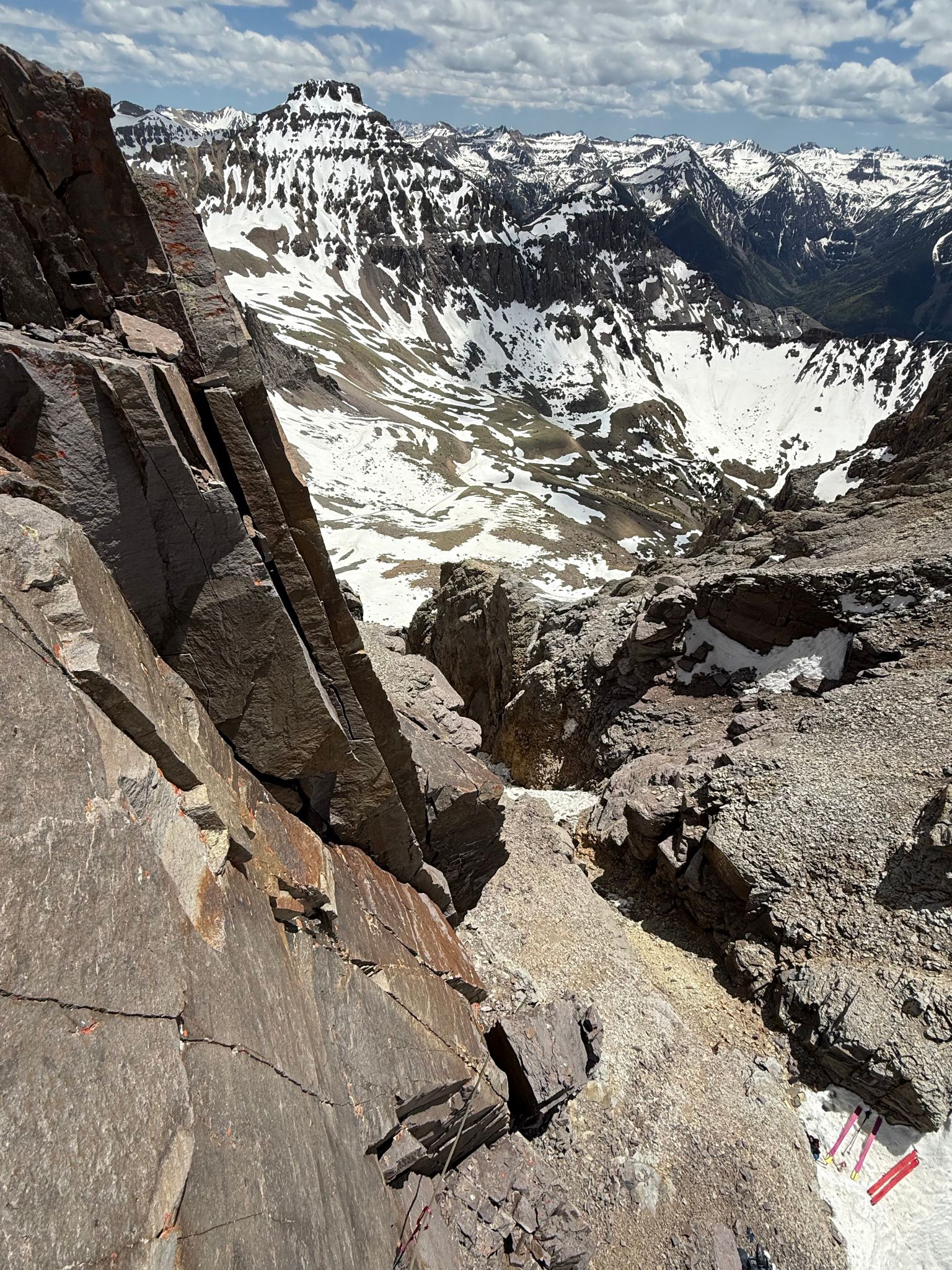
Skis patiently waiting in the notch... Emma to the southeast
![T3 gunslinger west crack 17]()
The upper section has 'perfect fingers' and goes at 5.10+ to 5.11
![T3 gunslinger west crack 18]()
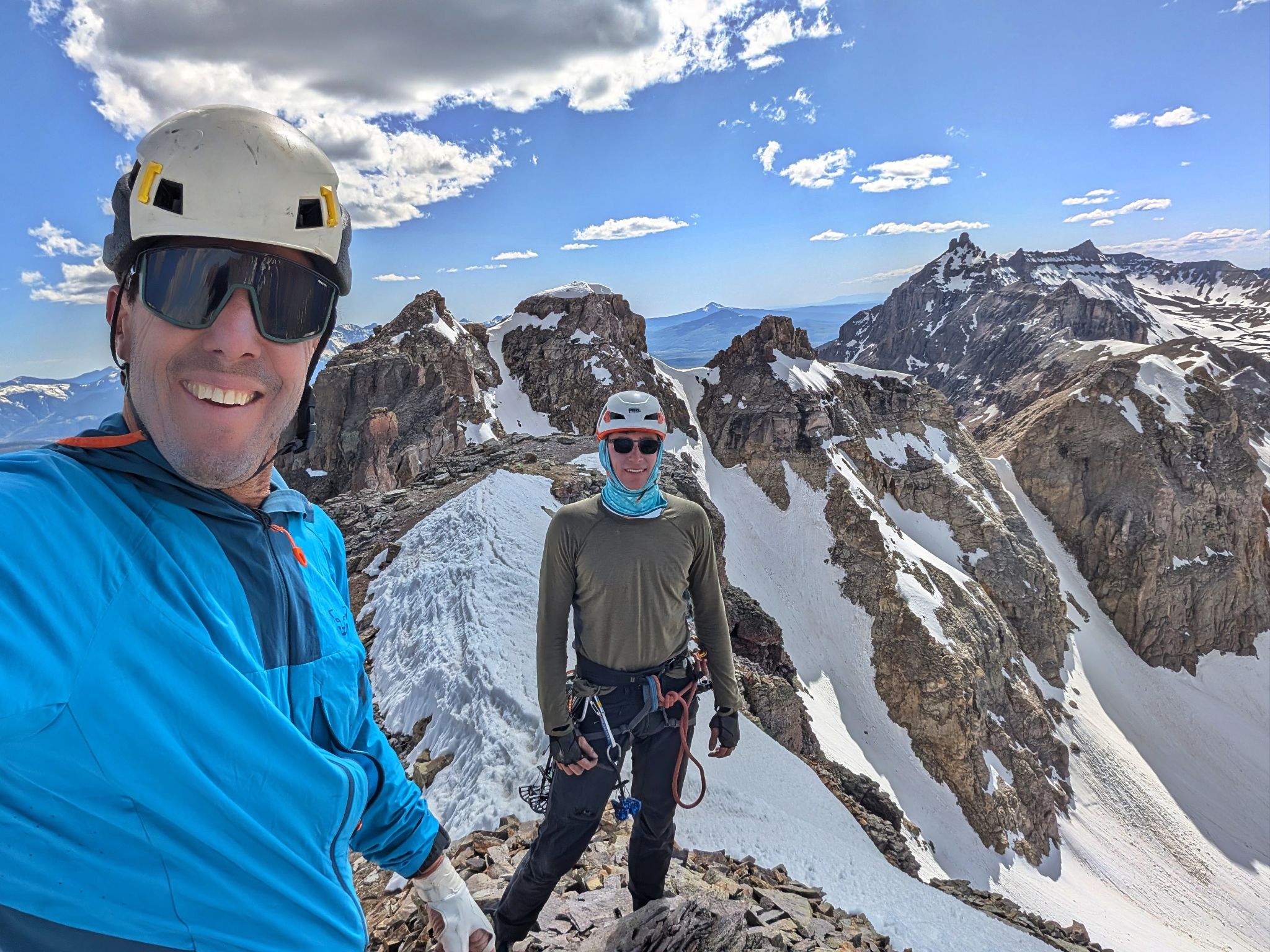
After easy jugging up the 50m pitch, I met Jack on the summit with nothing but smiles
![T3 gunslinger west crack 19]()
FA on August 5, 1934, by William Nagel, Robert Blair, Orval Settles, and Robert Thallon. And there is Jesse's note that enabled me to contact him!
![T3 gunslinger west crack 20]()
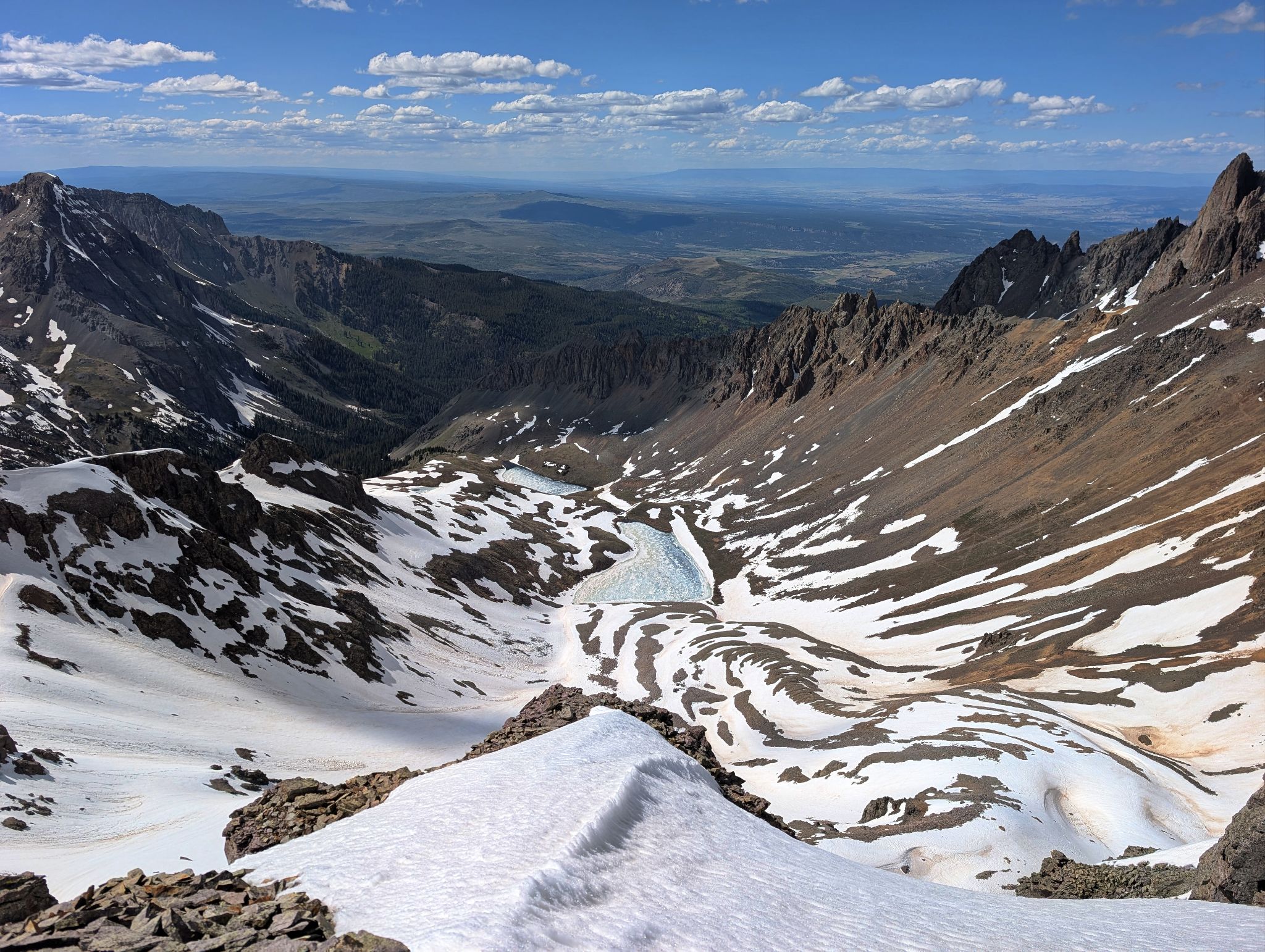
Northwest views to Blue Lakes
![T3 gunslinger west crack 21]()
Northern views to Sneffels and sidekick Kismet to it's right
![T3 gunslinger west crack 22]()
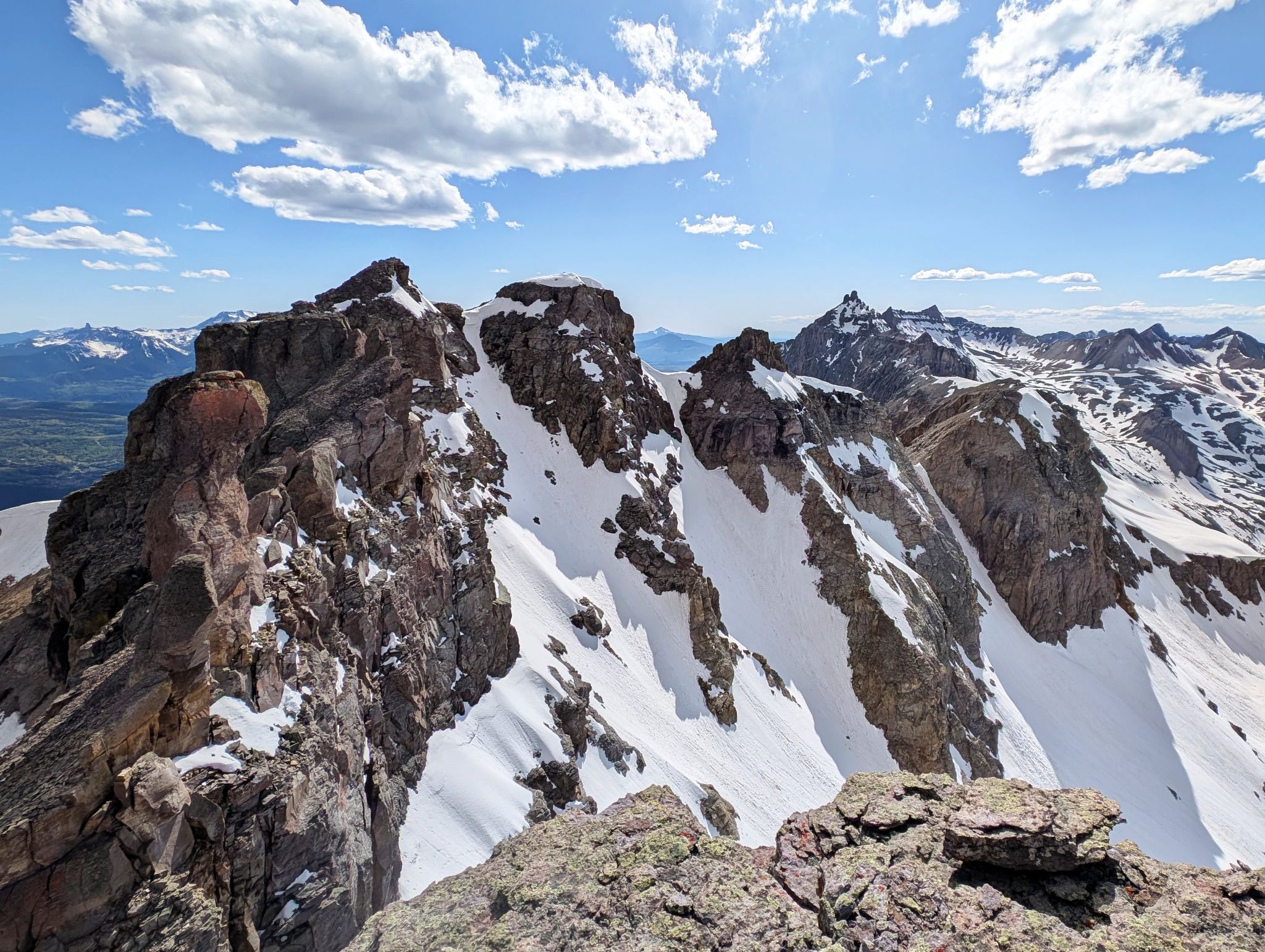
Eastern view of T4's chossy summit
![T3 gunslinger west crack 23]()
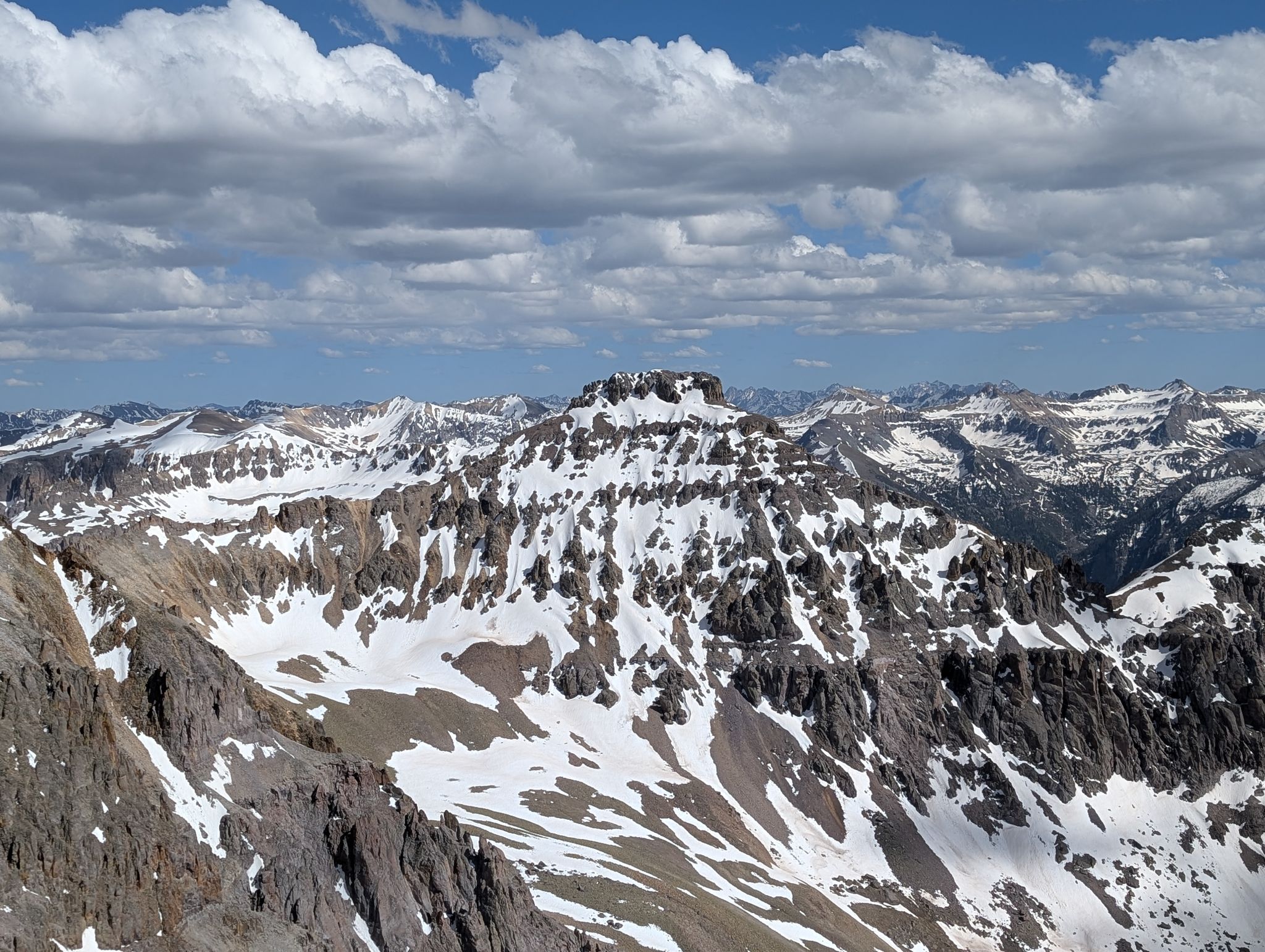
Emma's northwest face looks like it might have some rad ski lines!
![T3 gunslinger west crack 24]()
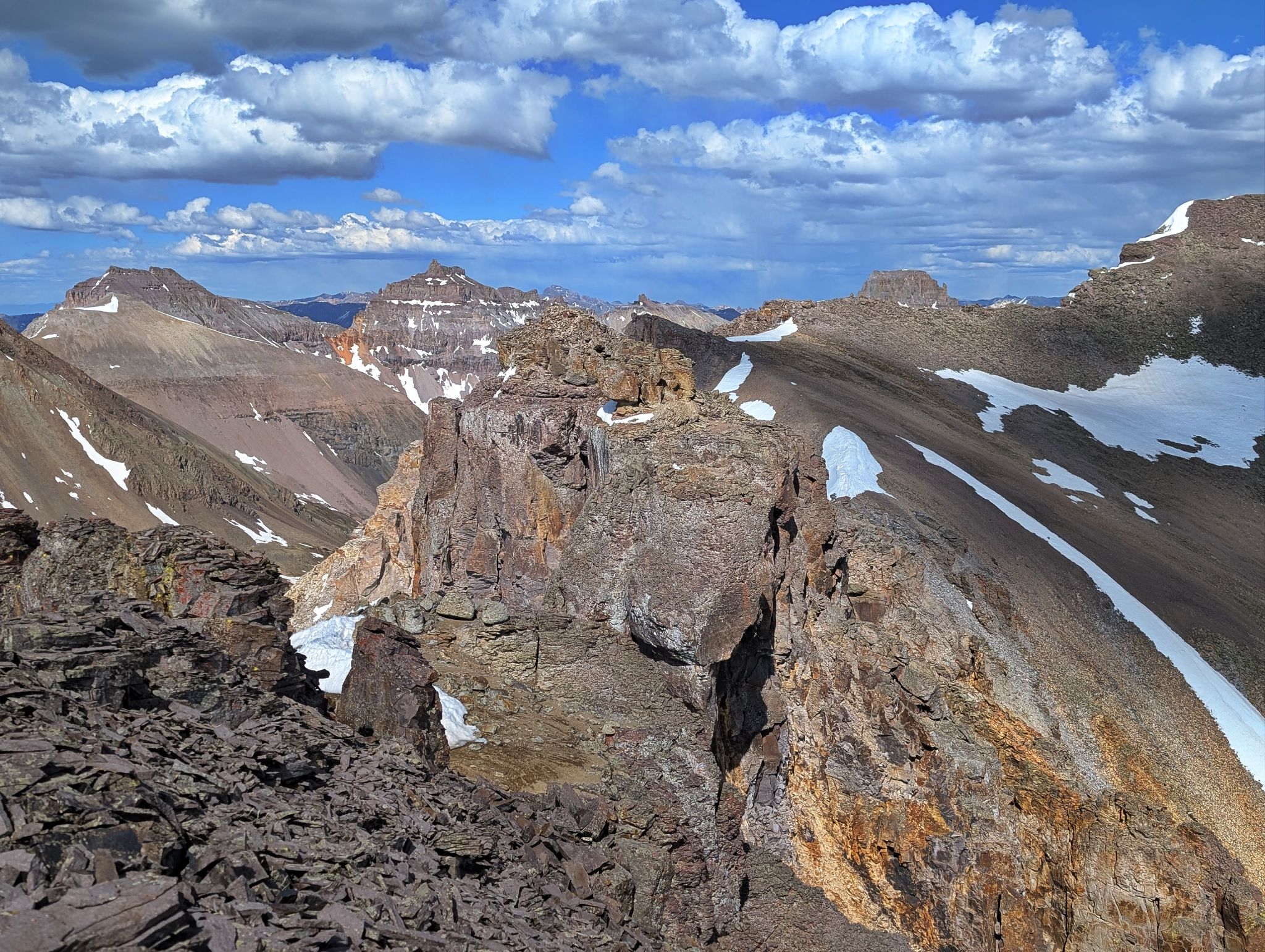
Western views of T2 and T1... Dallas and it's rabbit ears off in the distance
![T3 gunslinger west crack 25]()
The anchors are significantly extended and require 30ft+ of webbing. Otherwise you risk getting your rope stuck as the party before us
![T3 gunslinger west crack 26]()
After freeing the old ropes, we extended the anchors an additional 10ft and prepared our rappel
![T3 gunslinger west crack 27]()
Tension in the air as we pull our rope
![T3 gunslinger west crack 28]()
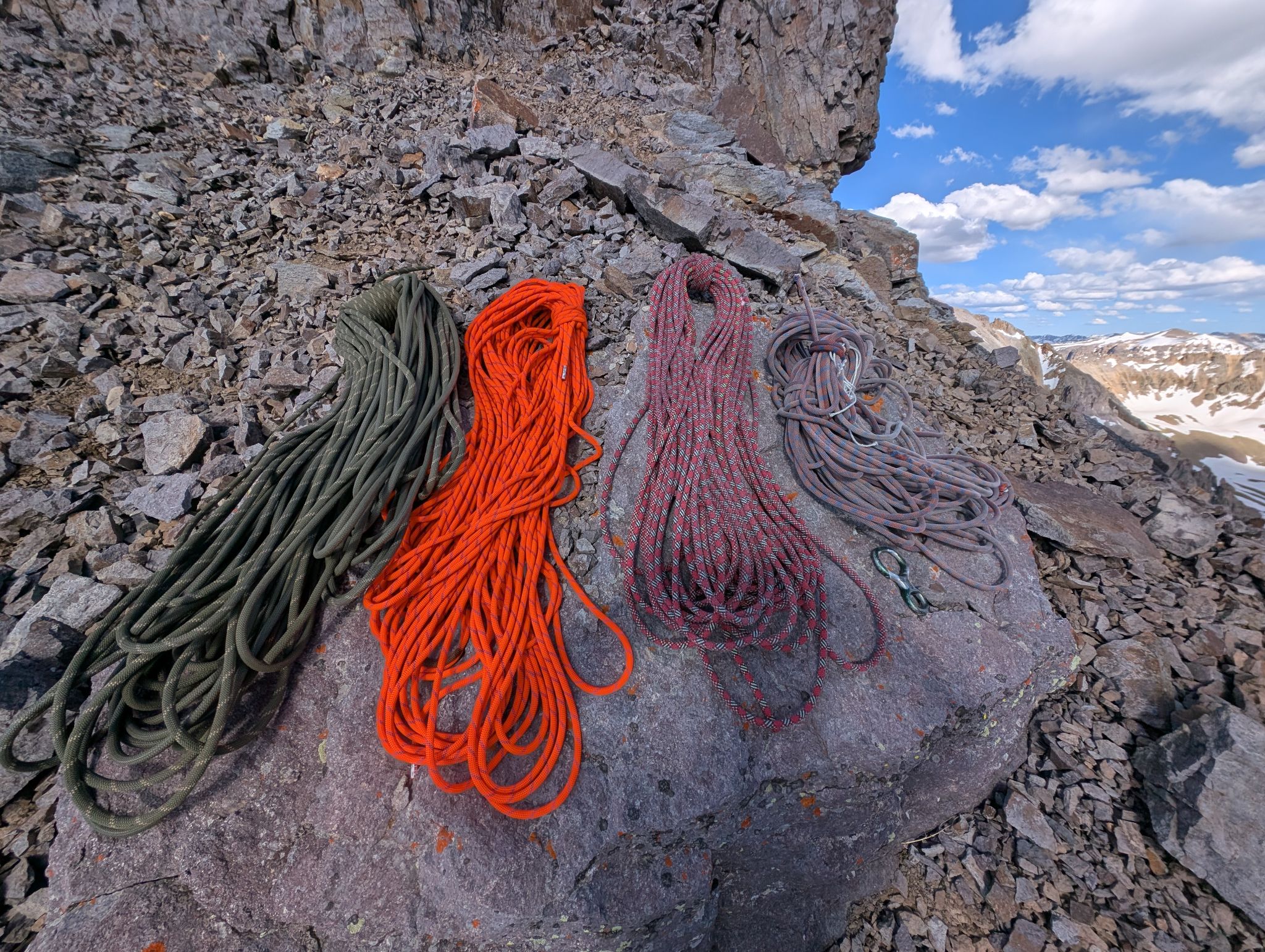
A big sigh of relief after successfully pulling our rope. We would now need to find a way to stuff all four ropes into our packs. Reward: an old figure 8 belay device we found at the base of the climb
![T3 gunslinger west crack 29]()
Side stepping down the narrow Gunsight Notch
![T3 gunslinger west crack 30]()
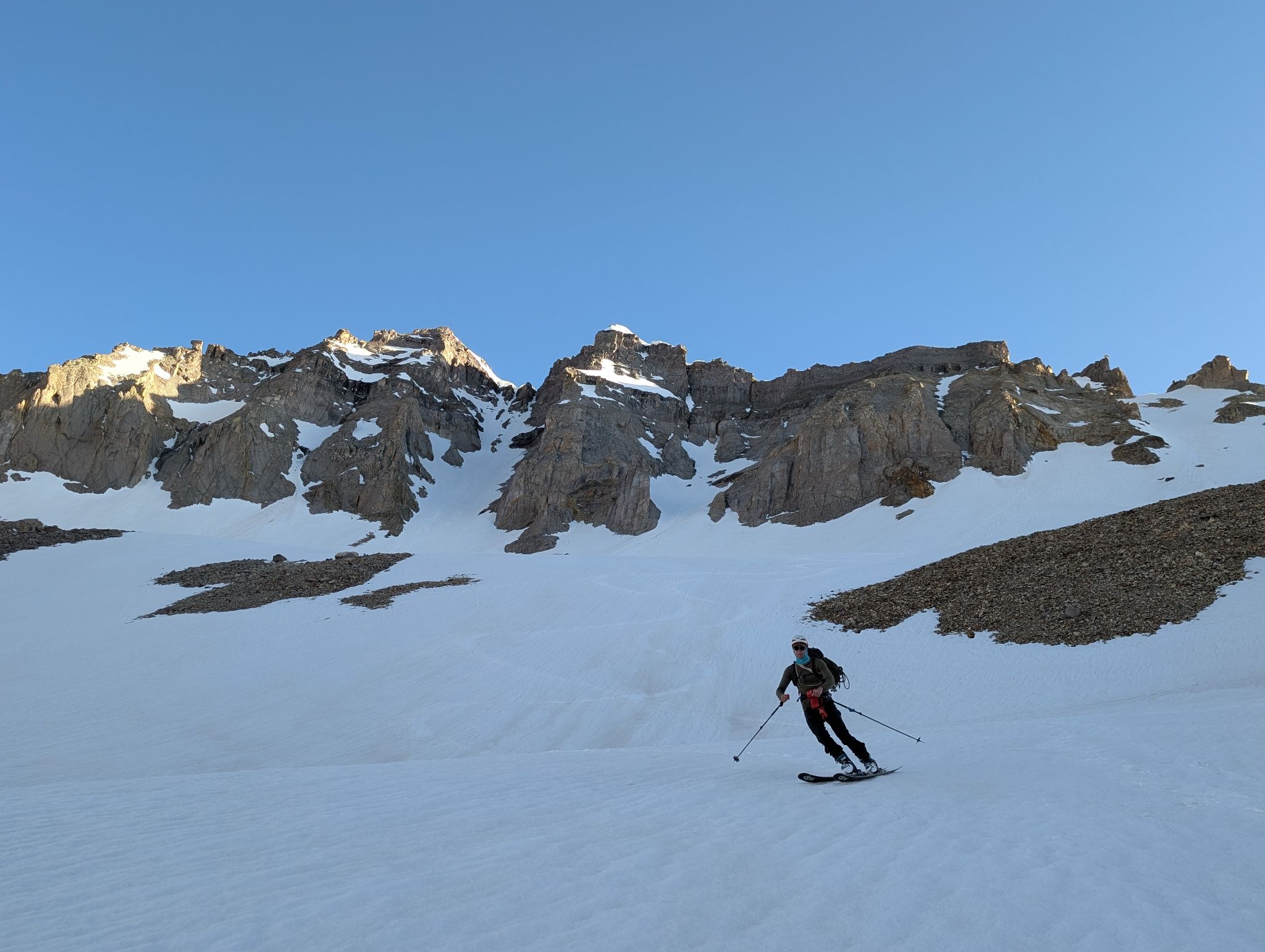
Enjoying some corn below Gunsight Notch
![T3 gunslinger west crack 31]()
Yeah buddy!!! Nothing like a successful climb followed up with some spring skiing
![T3 gunslinger west crack 32]()
Traversing back to the base of the Sneffels/Gilpin ridge
![T3 gunslinger west crack 33]()
An easy 300ft boot to the top of the ridge
![T3 gunslinger west crack 34]()
With Teakettle and Potosi as a backdrop, we skied corn under sunset light within a quarter mile of the truck
![T3 gunslinger west crack 35]()
Jack enjoying the turns below Gilpin's north face
![T3 gunslinger west crack 36]()
What a day!
![T3 gunslinger west crack 37]()
Oh boy... after a frantic search for the lug key we were able to resolve the situation and drive out while it was still light